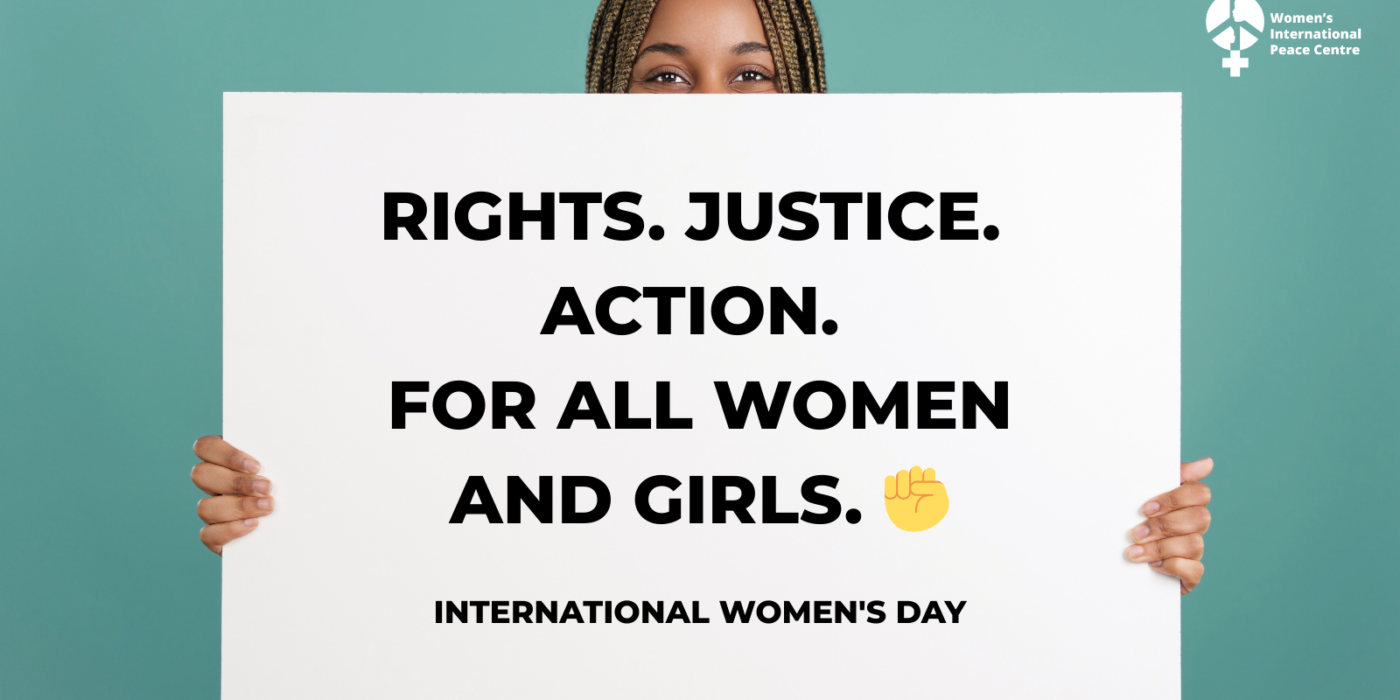
Every year on March 8, the world commemorates International Women’s Day, a moment to reflect on progress toward gender equality and recommit to advancing women’s rights. In 2026, the global theme “Rights. Justice. Action. For ALL Women and Girls” calls on governments, institutions, and communities to move beyond rhetoric and deliver tangible change.
Across the Great Lakes region — from eastern Democratic Republic of Congo to Sudan and South Sudan — conflict continues to shape the daily lives of women and girls today. And the consequences are stark.
Conflict across the region demonstrates that when women’s rights are weakened, when justice systems fail, and when action is delayed, the cost is borne overwhelmingly by women and girls.
When Women’s Rights Collapse, Violence Follows
In eastern Democratic Republic of Congo, the resurgence of conflict in 2025 intensified an already devastating humanitarian crisis. The advance of the M23 armed group into major cities such as Goma forced hundreds of thousands of people to flee and deepened insecurity across North Kivu and South Kivu. Today, the DRC has nearly 8 million internally displaced people, one of the largest displacement crises in the world. Women and children make up the majority of those forced to flee.
For many women, displacement means far more than losing a home. It means navigating overcrowded camps, limited access to healthcare, disrupted livelihoods, and heightened exposure to violence. Humanitarian agencies continue to report alarming levels of sexual and gender-based violence in eastern DRC, with tens of thousands of cases reported each year, many occurring in conflict-affected provinces such as North Kivu and Ituri
The consequences of insecurity were tragically illustrated during the violence that engulfed Goma in 2025, when a prison break at Munzenze prison reportedly led to the rape of more than 160 female detainees by escaping male inmates. The attack shocked observers worldwide, but it also exposed a deeper reality: when conflict erodes institutions, even places meant to provide protection can become sites of extreme vulnerability for women.
A Regional Crisis Affecting Women and Girls
The crisis extends beyond the borders of the DRC.
In Sudan, nearly two years of war between the Sudanese Armed Forces and the Rapid Support Forces have triggered one of the largest displacement crises in the world today. More than 11 million people have been forced from their homes, with millions crossing borders into neighbouring countries including South Sudan and Uganda.
Within these displacement flows, women and girls face heightened risks of sexual violence, exploitation, and trafficking, while also experiencing loss of livelihoods and limited access to health and protection services.
At the same time, many women are carrying the burden of sustaining families while navigating displacement, poverty, and insecurity.
In South Sudan, persistent localised conflicts, economic instability, and climate shocks continue to destabilise communities. Women peacebuilders are playing a critical role in mediating community disputes and advocating for the implementation of the country’s fragile peace agreement.
Yet women remain significantly underrepresented in national decision-making spaces.
Globally, women accounted for only 13% of negotiators and 6% of mediators in major peace processes between 1992 and 2019, despite evidence showing that peace agreements are 35% more likely to last at least 15 years when women meaningfully participate in negotiations.
Across the region, the pattern is consistent: women experience the deepest impacts of conflict, yet their leadership in shaping peace remains limited.
Why Rights, Justice and Action Matter Now
This is why the pillars of Rights, Justice, and Action are not abstract ideals but urgent necessities for women and girls living in conflict-affected communities
Rights ensure that women are protected from violence and recognised as equal citizens even in times of war.
Justice ensures that survivors of violence receive accountability and support, rather than silence and stigma.
Action ensures that commitments to gender equality translate into real investments in women’s leadership and participation in peacebuilding.
Without these working together, peace efforts risk leaving behind the very people most affected by conflict.
Across the Great Lakes region, women are already doing peacebuilding work. They are supporting survivors of violence, mediating community tensions and conflicts, rebuilding livelihoods, and advocating for accountability despite immense risks. They are not simply victims of conflict.
At the Women’s International Peace Centre, we see this leadership every day across the region. Yet we also see how fragile progress can be when women’s rights are not protected, when justice remains out of reach, and when action is delayed.
The Call of International Women’s Day 2026
This International Women’s Day, the message is clear.
Women and girls in conflict-affected regions cannot wait.
They need Rights.
They need Justice.
And they need Action.
Because sustainable peace in the region will only be possible when it works for all women and girls — today, not tomorrow.