Traversing the Intersectional Corridors

BY: Esther Wasagali

‘If we aren’t intersectional, some of us, the most vulnerable are going to fall through the cracks

Kimberle Williams Crenshaw – Lawyer, Civil Rights Advocate and Intersectional Feminist

The above statement closely relates to my understanding of intersectional feminism, which is listening to and centering marginalized voices, acknowledging my privilege and being open to criticism, honoring the past, and being skeptical of what you want to know. It also means more equality, hope, humanity, acceptability, and inclusiveness of the most marginalized groups.

While intersectionality is understanding how aspects of a person’s social and political identities combine to create different modes of discrimination or privilege, it also identifies multiple factors of advantage or disadvantage such as gender, sex, race, ethnicity, class, sexuality, disability, religion and physical appearance. These intersecting and overlapping identities may be empowering or oppressing. For example, in Uganda in the conflict and post conflict areas where the Peace Centre works, some cultures and religious beliefs, and poverty allow early/child marriage thus limiting girls’ right to access and complete education. There have been incidences of them being exchanged for money as low as 50,000 Ugandan Shillings (about $13) this has been tributed to economic downturn due to COVID 19. In some communities, women cannot effectively participate in decision making processes due to cultures that relegate women to the private sphere. In addition, some women cannot speak in the presence of men or in public. If they are to speak, they must seek permission from their husbands, such practices limit their participation in decision-making and peace processes.

Feminist intersectional approaches broadened the scope of first–wave feminism which mainly focused on suffrage and overturning legal obstacles to gender equality (e.g. voting rights and property rights), and second-wave broadened the debate to include a wider range of issues: sexuality, family, domesticity, the workplace, reproductive rights, de facto inequalities, and official legal inequalities and largely focus on the different experiences of women who are poor, immigrant and other groups. Intersectionality acknowledges women’s different experiences and identities. Intersectionality critically analyzes how interlocking systems of power, ethnicity, gender identity, marital status, gender oppression, education, political affiliation, race, and culture affect those who are most marginalized in society.

Intersectional Feminist Peace requires that we apply an intersectional lens to peacebuilding by recognizing and addressing the ways in which systems, structures, and attitudes can lead to multiple and overlapping forms of structural discrimination and disadvantage. Marginalized women need to be part of the conflict resolution and peace agreement processes as well as sit at the peace tables to voice out pertinent issues affecting them.

Wars and conflict destroy lives, livelihoods, the economy, families, and much more but women are disproportionately affected by them. Existing inequalities and inequities get magnified and even decades after a conflict, women continue to bear the brunt. Wars make women more vulnerable to sexual violence and exploitation as social networks break down along with institutions that prevent gender-based violence. Often, the effect of conflict on women is forgotten or not given the attention it deserves. However, women in conflict and post-conflict areas have created support systems among themselves, especially victims of gender-based violence. Women have contributed to peacebuilding by mediating conflicts within their communities and spearheading peace initiatives.

According to UN Women, women constitute 10% of peace negotiators globally and only 3% of the signatories to peace agreements. For instance, in the 2018 South Sudan peace process, there was one female mediator, yet women constitute 25% of the official delegates. UN in Africa recognizes that women give in their time, careers, and lives in the search for peace and that women have meaningfully contributed to numerous peace processes. However, there is a need to consider intersectional feminism in our daily lives, and in peacebuilding. The Uganda National Action Plan III 2021- 2025 highlights actions for tackling conflict and other problems that undermine women’s participation in decision making processes; they include increasing women’s participation in promoting peace and security by encouraging women’s participation in dialogues on peace and security,  support more women to participate in peace dialogues, implement programs that mentor and coach women in leadership and management. Women’s participation in the labour sector creates new openings for women to influence social and political structures and as custodians of culture and nurturers of families, we need to allow women to be represented at the peace negotiating tables or in community reconstruction efforts.

As people that interact with the most vulnerable women that have been affected by war and conflicts, we need to practice intentional listening by attentively listening when women have something to say, this will enable a deeper understanding of their experiences and needs. Providing an enabling environment that allows different categories of women to express their views promotes their participation and contributes to peace and security.

Peacebuilding programs must consider the difference in women’s economic status, location, education, low-income women, and women in the formal and informal sectors.  It is vital to reorganize that woman in conflict and post-conflict areas have varying experiences due to the impact of war that destroys their confidence and ability to speak, cause trauma and inequalities amongst them and the communities they live in, deprives them of social and cultural sense of belong and hinders their ability to participate in the economy.  Intersectional peacebuilding will help us understand the kinds of violence women suffer and appreciate the varied interest, needs, agencies, and view toward what constitutes inclusive and sustainable feminist peace.

I strongly believe that all women despite their differences should be involved in decision-making and peace processes and that key actors should recognize the critical role that women play in promoting intersectional peacebuilding at various levels because ‘no country can ever truly flourish if it stifles the potential of its women and deprives itself of their contribution” Michelle Obama- Former First Lady USA.


NOTE: This article is an extract from the Feminist Pace Series, 3rd Edition. Download the full Magazine here: How to Build Feminist Peace Using an Intersectional Perspective


Why Intersectionality Must Be Central to Feminist Peacebuilding

By Pauline Kahuubire

Feminist peacebuilding acknowledges that women, men, girls, and boys in society experience conflict differently and recognizes the key roles that women and other marginalized groups play in peacebuilding and conflict resolution. Intersectionality points to the ways systems of inequality based on gender, race, ethnicity, sexual orientation, disability, class, and other forms of discrimination mutually reinforce one another to create unique dynamics and effects of conflict on vulnerable persons.

This article argues that an approach to peacebuilding that does not include other dimensions such as socio-economic status, immigration status and other inequalities is likely to reinforce injustices among women and girls. It explores the disproportionate impact of conflict on women, highlights challenges to their participation in peacebuilding and offers recommendations for prioritizing the needs of women and other groups of people who face structural barriers in society.

By their nature, and because of the patriarchal societies that we live in, conflicts disproportionately affect women and girls. Last year, rape and other forms of violence against women in conflict settings increased by 20% globally. In Goma, the Democratic Republic of Congo where the government is currently fighting M23 rebels, the face of displacement is female – a baby in one hand, a
mattress in the other. Moreover, conflicts are unpredictable, especially in the
absence of adequate early warning and response systems, where it is difficult to anticipate when conflicts will end. As a result, the immediate and short-term responses usually focus on dealing with the impact.
When the guns are blazing, it is difficult to assess the effectiveness of the response.

It is only when the guns go silent and grievous harm has been done that actors realize two crucial things. First, women and girls bear the brunt of the conflict, considering other structural violence suffered based on class, sexual orientation, or ethnic background. Secondly, women are essential to responding to conflict situations for recovery efforts to be effective and sustainable.

Conflict resolution and response interventions are beginning to involve women although at a much slower pace than desired. According to the 2021 United Nations Secretary General’s Report on Women, Peace and Security, only 8 out of 25 peace agreements in 2021 referenced women. Most recently, during the handshake that affirmed the Ethiopia-Tigray truce, only male hands were seen  although history shows that peace agreements that excluded women have failed, as observed with the first Agreement on the Resolution of the Conflict in South Sudan in 2015

For young women, traditional structures, customs, and values prevent their effective participation in formal peacebuilding. The lack of access to information, threats, violence, lack of access to economic resources and opportunities, as well as unpredictable and inadequate funding, especially for grassroots women and youth organizations prevent their participation in decision-making and peacebuilding.

Sometimes we are discriminated against because of the assumption that we do not know anything. As a young person, and especially a young woman, I am one of the most affected by war and conflict. Our presence in decision-making and peacebuilding is important because interventions will be influenced by our experiences. Elizabeth Yuol, a young woman South Sudanese refugee living in Uganda

Furthermore, when women are included in peacebuilding interventions, oftentimes they are engaged as a homogenous group, with similar experiences and concerns. That a younger woman faces the same challenges as an older woman, that a woman with a disability lives the same reality as an abled woman refugee, that a woman living in an urban refugee settlement has the same concerns as one in a rural internally displaced peoples’ camp and that the individual needs of all these women should not be independently examined when creating solutions to crises.

Intersectional feminist peacebuilding asserts that when taken as a whole, without considering the individual needs of all women and girls, there are bound to be unresolved issues and with unresolved issues, conflicts are likely to reoccur. The cycle ends in increased vulnerability of women to discrimination, sexual violence, and violent extremism in some instances.

Feminist peacebuilding also recognizes the intersections between patriarchy and other systems of oppressions such as capitalism, ageism, classism, authoritarianism, and colonialism and how they exacerbate inequalities against women and girls during conflicts and crises.  It suggests that there should not be a one-size fits all to humanitarian response.

For instance, at the onset of the COVID-19 pandemic, global response measures involved the use of quarantines and lockdowns to contain the spread of the virus. This measure did not consider how confinement would affect women and girls in their varied diversities. Women working in markets in Uganda were forced to sleep in the markets to continue earning a living and yet their safety was not guaranteed.  If women had been consulted, they would have proposed alternatives that worked for them.

Therefore, for future crises, women must be engaged to ensure they have an opportunity to highlight solutions that will not leave them adversely affected. Deliberate action must be taken to ensure that all categories of women are included in terms of class, sexuality, ethnicity, and disability as recognized by the Women and Peace and Security (WPS) agenda, the Youth and Peace and Security (YPS) agenda and the Sustainable Development Goals (SDGs).

Secondly, in most communities, women are the glue that hold the social fabric together. This makes them critical actors in rebuilding societies that have experienced conflict. They participate in door-to-door peacebuilding campaigns and mediate conflict situations at family and communal level, which exposes them to the risk of being attacked. Across the globe, women human rights defenders have increasingly been targeted with attacks that silence their advocacy and prevent them from participating in public life.

In Uganda, Sarah, a middle-aged South Sudanese woman living in a refugee settlement in Adjumani district was trained by Women’s International Peace Centre as a peace mediator. She told me about an incident where she felt that her life was in danger. Using the skills acquired from the previously mentioned training, she would approach families that appeared to be experiencing domestic disputes and where violence was evident and attempt to intervene. On one occasion, the male perpetrator threatened to attack her too citing her interference in domestic matters.

Still in Uganda, an election peace advocate trained by the Women’s Situation Room in Mityana district was violently attacked because her message of peace was construed as support for the ruling government. An intersectional approach to feminist peace must consider such risks and ensure that women in peacebuilding are protected, not stigmatized or subject to other forms of violence such as political violence. It guarantees an enabling and safe environment for women working on peace and security and ensures that they do not face reprisals for their work.

Next, the need for relevant data to inform policies on women’s rights and participation cannot be stressed enough. In most of the evidence presented on conflict, women are invisible which translates in their erasure from policy interventions. Thus, using feminist lenses to document and capture the lived realities of all women will generate evidence for policy response. Data must detect and question existing gender inequalities and systems of oppression, and how they intertwine to affect women and girls in fragile settings.

Relatedly, relevant information should be made available for women to participate in peace processes. Profile refugee women and how they are disconnected from their home countries. Because there are weak linkages between them and women in their home countries, they find it difficult to keep up with peace processes and influence their outcomes. Information should be made readily accessible for women to keep track of relevant events and circumvent the evolving tactics of conflict. It is important that critical information such as peace agreements should be translated into local languages that are easily understood by most women.

If peace tables prioritize the needs of warlords over women, that should be an indication to do away with the tables. Because peace is not built overnight, strengthening collective power, and taking collective action in peacebuilding needs to be promoted to ensure sustainability. An intersectional and non-discriminatory approach to feminist peacebuilding has the power to bridge movements and identities and kickstart change by dismantling unequal power structures while centering the needs and experiences of marginalised groups.

At the end of the day, feminist peace building must recognise and respond to the systemic drivers of inequality and use emergencies as catalysts to advance women and girls’ rights. Even within itself, it must identify unjust formal and informal power relations by regularly critiquing the extent to which its structures and processes reinforce oppressive power relations through humanitarian action.

NOTE: This article is an extract from the Feminist Pace Series, 3rd Edition. Download the full Magazine here: How to Build Feminist Peace Using an Intersectional Perspective


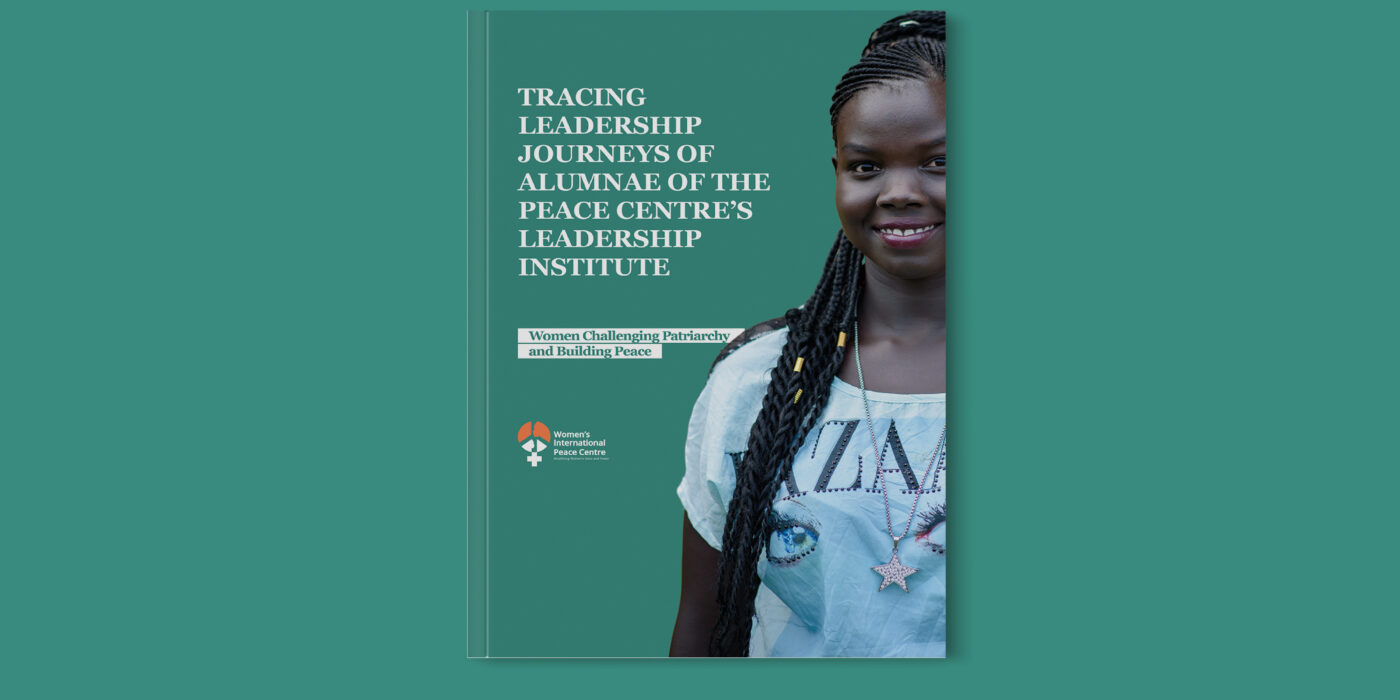
How To Build Feminist Peace Using an Intersectional Perspective

We are excited to bring you the 3rd Edition of the Feminist Peace Series.

For this edition, we invited authors to work on how to build peace using an intersectional approach. Authors have written based on their personal and professional experience in building peace grounded in feminist peace understanding. Each article shares experience of how intersectionality operates in conflict and post conflict

Download : FPSMagazine_3rdedition (1) (1)

Engagement of the African Union (AU) Peace and Security Council with the Civil Society in South Sudan

The Peace and Security Council (PSC) of the African Union conducted its seventh field mission to South Sudan from 22nd to 25th February 2023 as part of its mandate to promote peace, security and stability in Africa.

The field mission was undertaken as a follow-up to the Council’s decisions and those of the African Union (AU) Assembly on the situation in South Sudan, particularly the transition process involving the commencement of the 24-month extension of the Transition period for the implementation of the Revitalised Agreement on the Resolution of Conflict in the Republic of South Sudan (R-ARCSS) .

To determine the progress made in  the implementation of the Revitalised Peace Agreement , the AU PSC on February met with various stakeholders including representatives from government, civil society, faith based organisations, think tanks and the media to discuss the socio-political, economic and security situation in the country.

 Prior to this meeting, the Peace Centre on February 22, supported 15 women leaders to      identify key issues of concern to women and develop a submission to the delegation.

The women’s submission highlighted several unaddressed issues and emphasized the role of women in the implementation of the newly announced Roadmap to a Peaceful and Democratic end of the Transitional Period for peace. They called for:

  • Fast-tracking of the establishment of transitional justice mechanisms such as the Commission for Truth, Reconciliation and Healing (CTRH) and the Compensation and Reparation Authority (CRA
  • Strict adherence to the 35% quota for women’s participation by all parties at all levels of the peace process, including in the permanent constitution-making process
  • Popularisation of the National Action Plan II for Women, Peace, and Security which will contribute significantly to the overall success of the Roadmap for Peace
  • Fast-tracking of the disarmament process since the ownership of guns by civilians poses a great threat to the safety and wellbeing of women and children who are most affected by armed violence
  • The establishment of mobile GBV courts outside of Juba to ensure that perpetrators of gender-based violence are held accountable for their actions

 Several issues were adopted in the AU communique of the Ministerial Special Session on Sudan which the government of South Sudan is mandated to implement as part of its commitment.
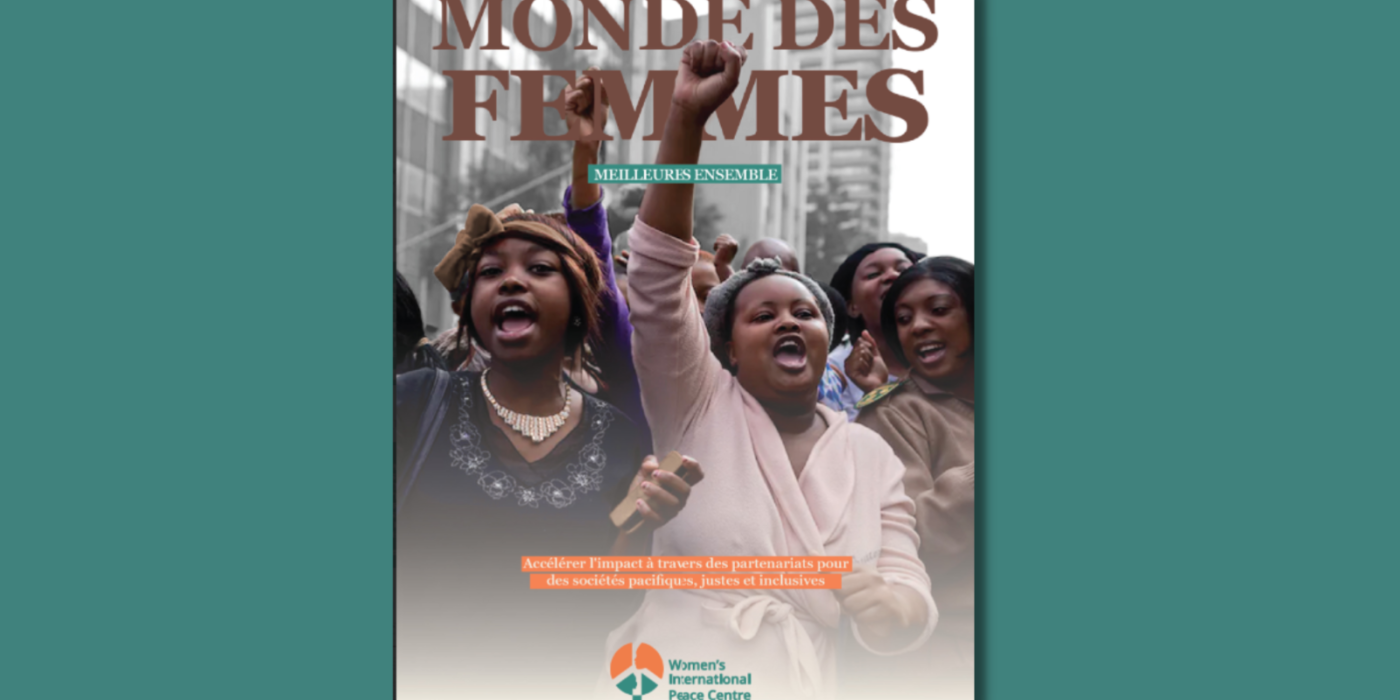
Accelerating Impact through Partnerships for Peaceful, Just and Inclusive Societies

Women’s World 54 seeks to reflect on the strategies used and lessons learned in the implementation of the Just Future programme by civil society partners in Burundi, DRC and South Sudan.

In this edition, the partners report on progress in their advocacy initiatives,
using the knowledge and skills gained from the various interventions. They offer recommendations for the improvement of the Just Future programme and similar
coalitions as well as how the participation of their core constituencies can be enhanced by bringing attention to key areas for their growth and highlights from their regional advocacy efforts which allow them to influence peace and security discourse and practice at that level.

The experiences shared underscore several successful approaches that can be leveraged, scaled and replicated by like- minded entities, by adapting them to their own programmes to advance the Women, Peace and Security agenda.

Download : Women’s World 54_EN

Women’s World 54_FR

Accélérer l’impact grâce aux partenariats en faveur des sociétés pacifiques, justes et inclusives – Monde Des Femmes 54

Monde Des Femmes 54 propose des réflexions sur les approches utilisées et les leçons apprises dans la mise en œuvre du programme Just Future par les organisations de la société civile partenaires du Burundi, de la RDC et du Soudan du Sud.

Dans cet article, les partenaires reviennent des progrès réalisés dans leurs initiatives de plaidoyer, en se focalisent les connaissances et les compétences acquises grâce aux différentes interventions de terrain. De ce fait, les organisations de la société formulent des recommandations susceptibles de contribuer à l’amélioration du programme Just Future ainsi que sur la manière dont la participation des acteurs clés peut être renforcée en attirant l’attention sur les domaines clés de leur croissance et les points saillants de leurs efforts régionaux de plaidoyer qui leur permettent d’influencer le discours et les pratiques en matière de paix et de sécurité à ce niveau.

Les expériences ici partagées soulignent diverses approches réussies lesquelles peuvent être exploitées dans les pays ayant le même contexte, mais en les adaptant aux programmes spécifiques pour faire progresser l’agenda femmes, la paix et la sécurité.

Telecharger: Monde des Femmes 54

Building and Conceptualising Peace: Feminist Strategies and Approaches

Co-authored by our Executive Director, Helen Kezie-Nwoha, Nela Porobić Isaković, Madeleine Rees and Sarah Smith, the article focuses on global governance structures of peacebuilding and the securitization of peace, examining in turn how these operate to block women’s participation and feminist strategies of peace.

Download the Article here: Building and conceptualizing Peace

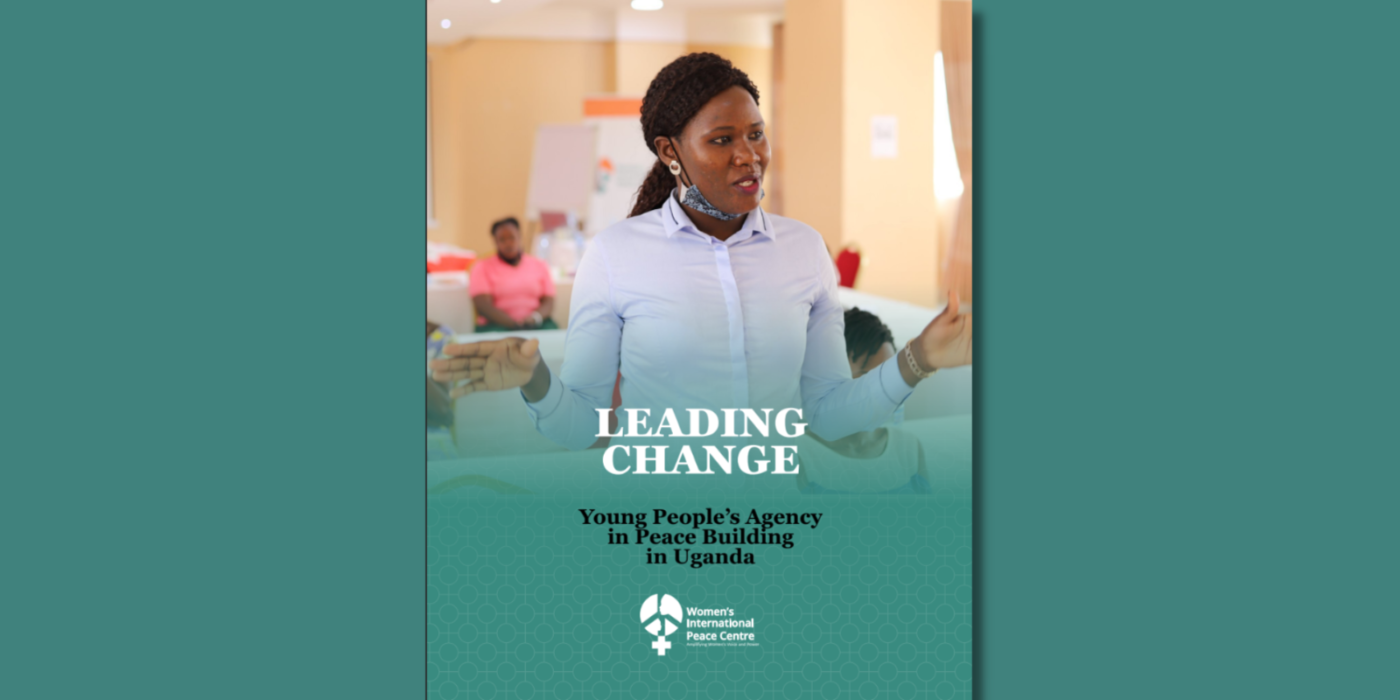
Leading Change; Young People’s Agency in Peace Building in Uganda

The Peace Centre is running a project Women Reclaiming Agency for Peace building in Uganda aimed at strengthening the knowledge and skills of women and youth to effectively participate in peace building processes.

This report documents the unique experiences, strategies and changes seen
by implementing the project.

Download the report: Leading Change; Young People’s Agency in Peace building in Uganda

Reflections From the United Nations Security Council 2022 Open Debate on Women, Peace and Security: The Rhetoric Continues

By Helen Kezie-Nwoha

October 31st 2022, marks exactly 22 years since the adoption of United Nations (UN) Security Council Resolution 1325 on women, peace and security (WPS). Every year during the month of October the UN Security Council convenes an open debate to receive the report of the UN Secretary-General on WPS and listen to member states, UN entities, and different actors on the status of implementing the women, peace and security agenda. This year was no different as the meeting took place on October 21st 2022.

In this article, I share some of the gains of the WPS movement and areas that need more work as reflected in the 2022 UN Security Council open debate.

Read More “Reflections From the United Nations Security Council 2022 Open Debate on Women, Peace and Security: The Rhetoric Continues”