Communique for the Annual Women’s Conference on Women Peace and Security

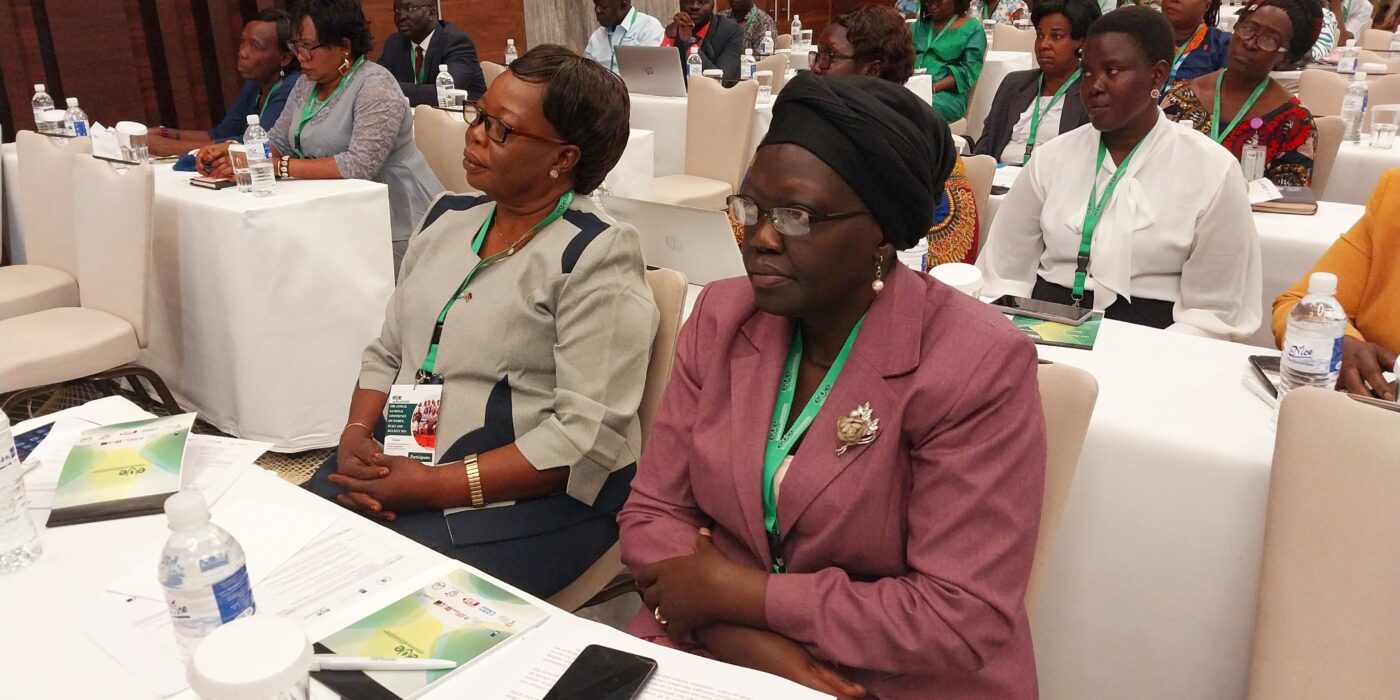
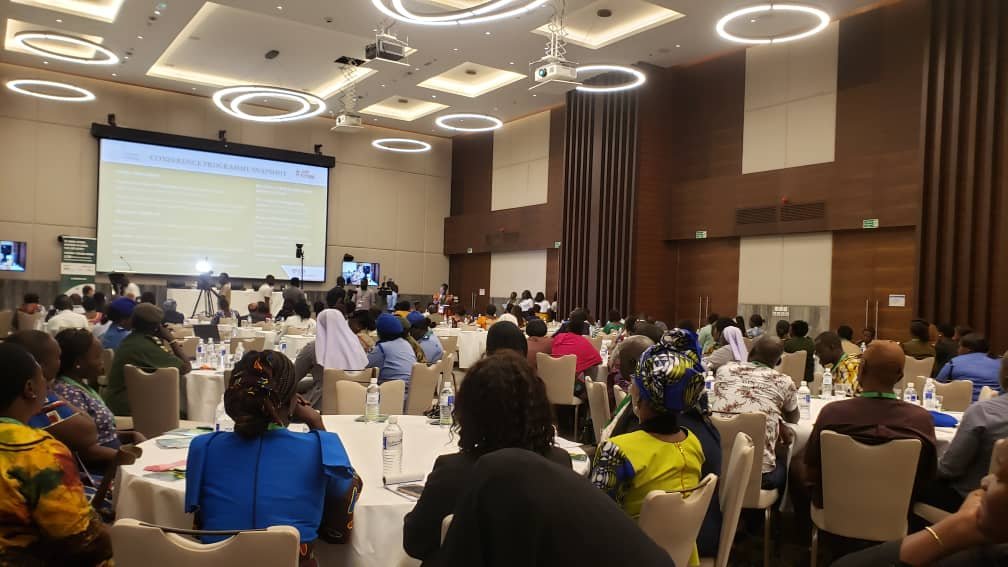
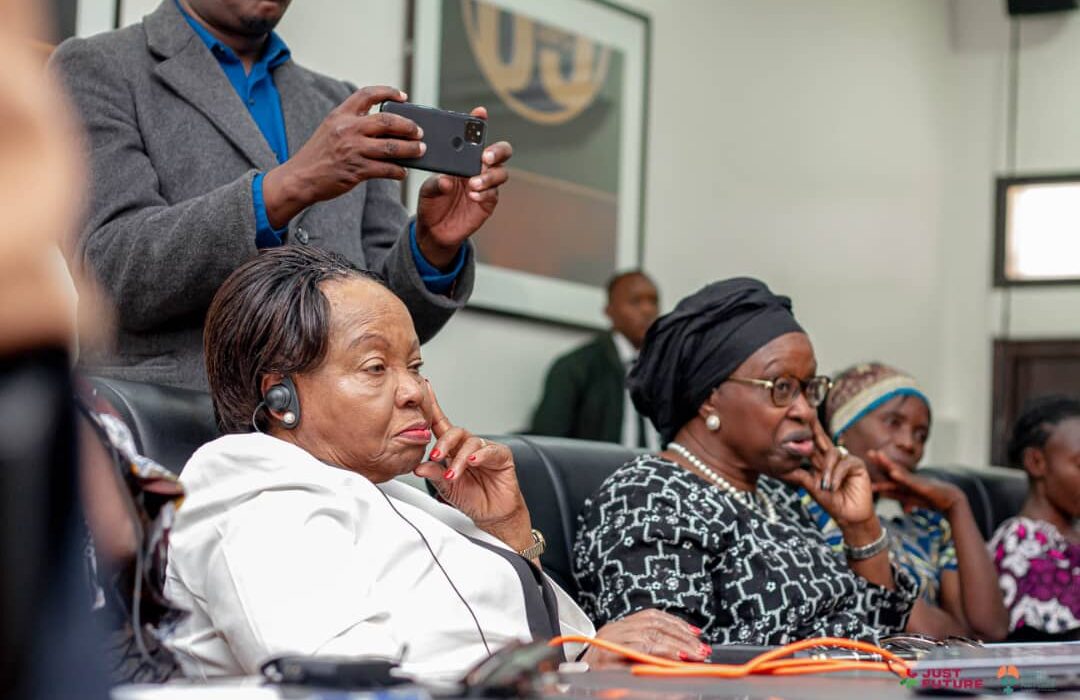
In a significant stride towards fostering inclusivity and democracy in South Sudan, the 3rd Annual National Conference on Women, Peace, and Security was recently concluded at the Radisson Blu Hotel in Juba. The conference, held from October 25-26, 2023, brought together South Sudanese women leaders from all ten states and various partners. Under the theme “Building Inclusive Democracy: Women’s Leadership and Political Participation,”

The event yielded a joint communiqué outlining pivotal recommendations and initiatives aimed at empowering women in the political sphere.

Acknowledging Collaborative Efforts: The conference recognized the collaborative efforts of organizations such as Eve Organization, the National Ministry of Gender, Child and Social Welfare, Cordaid, Plan International, Christian Aid, HealthNet TPO,  PAX and the Women’s International Peace Centre. Their successful organization of the event facilitated dialogue among over 200 delegates from South Sudan’s ten states.

Key Recommendations:

  1. Political Participation: Urging for expedited implementation of transitional security arrangements, the communiqué emphasizes the deployment of unified forces and payment of their salaries to ensure a safe environment for elections. Additionally, the reconstitution and operationalization of key bodies like the Political Parties Council and the National Constitutional Review Commission are stressed to ensure women’s inclusion.
  2. Legislative Support: The document highlights the importance of passing key bills, including the Women Enterprise Fund Bill and the Anti Gender Based Violence Bill, to protect women’s rights. It also calls for the Ministry of Interior to facilitate national ID acquisition for women and support their political participation through resources and initiatives.
  3. International Collaboration: Donors, UN agencies, and INGOs are urged to support women’s organizations financially, specifically during the constitution-making and electoral processes. Establishing funds for civic education, monitoring elections, and responding to gender-based violence incidents were emphasized.
  4. Civil Society Initiatives: Civil society organizations are encouraged to intensify civic education, advocate for the passing of crucial bills, organize conferences to reconcile women from different political backgrounds, and bridge the gap between senior and young women leaders through dialogues and mentorship programs.

Looking Ahead: The communiqué reflects a collective commitment to closing the gender gap in South Sudan’s political landscape. By empowering women, fostering inclusivity, and addressing systemic challenges, the nation takes a significant step towards building a democratic society where every voice matters. Through collaborative efforts and targeted initiatives, South Sudanese women are poised to play a pivotal role in shaping the country’s future.

Download Full Communique : Final-Communique-Annual Women’s Conference-Oct-2023

National Conference of Women leaders on Women, Peace and Security – South Sudan

In a resounding display of unity and determination, over 200 South Sudanese women leaders, alongside representatives from diverse sectors, gathered on October 25-26, 2023  in Juba for the 3rd Annual National Conference on Women, Peace, and Security. Against the backdrop of the conference’s theme, “Building Inclusive Democracy: Women’s Leadership and Political Participation,” the women articulated a powerful vision for a more democratic and inclusive South Sudan.

Read More “National Conference of Women leaders on Women, Peace and Security – South Sudan”

#CeasefireNow: Open Call for an Immediate Ceasefire in the Gaza Strip and Israel to Prevent a Humanitarian Catastrophe and Further Loss of Innocent Lives

#CeasefireNow: Open Call for an Immediate Ceasefire in the Gaza Strip and Israel to Prevent a Humanitarian Catastrophe and Further Loss of Innocent Lives

We have witnessed unfathomable death and destruction in the Gaza Strip and Israel. Thousands of people have been killed, injured, displaced, and nearly two hundred remain held hostage, including children and elderly.

In Gaza, the UN has said that water, food, fuel, medical supplies, and even body bags, are running out due to the siege. The UN warned that people – particularly young children – will soon start dying of severe dehydration. Neighbourhoods have been destroyed and turned into complete rubble. Palestinians in search of safety have nowhere to go. Many of those who relocated from northern Gaza to the south after the relocation order by the Israeli army were reportedly bombed as they attempted to flee or once they arrived in southern Gaza.

The events of the last week have led us to the precipice of a humanitarian catastrophe and the world can no longer wait to act. It is our collective responsibility.

On Sunday, October 15th, the United Nations Humanitarian Coordinator to the Occupied Palestinian Territory appealed to all parties to the conflict, and to Member States with influence, to urgently agree to a humanitarian ceasefire.

Today, we put our voices together and call on all Heads of State, the UN Security Council, and actors on the ground, to prioritize the preservation of human life above all else. During this ceasefire, we call on all parties to unconditionally:

  1. Facilitate the delivery of lifesaving assistance, including food, medical supplies, fuel, and the resumption of electricity and internet to Gaza, in addition to safe passage of humanitarian and medical staff
  2. Free all civilian hostages, especially children and elderly
  3. Allow humanitarian convoys to reach UN facilities, schools, hospitals, and health facilities in northern Gaza and commit to protecting them along with the civilians and staff inside them at all times
  4. Rescind orders by the Government of Israel for civilians to depart northern Gaza
  5. Allow patients in critical condition to be medically evacuated for urgent care

The UN Security Council, the UN Secretary General and all world leaders with influence must take immediate action to ensure a ceasefire comes into effect. It remains our only option to avert further loss of civilian life and humanitarian catastrophe. Anything less will forever be a stain on our collective conscience.

Civilians are not bargaining chips. Families need a chance to bury and mourn their dead. The cycle of violence against innocent civilians needs to stop.

Implementing the Maputo Protocol Towards the Women, Peace and Security Agenda

Parallel Session at the Maputo Protocol @20 Anniversary, Nairobi – Kenya Dates: 11 July 2023

Women’s International Peace Centre in collaboration with Oxfam International convened a parallel session at the 20th anniversary commemoration of the ground-breaking AU Protocol to the African Charter on Human and Peoples’ Rights on the Rights of Women in Africa (Maputo Protocol). The objectives of the event were twofold. First, the session provided a unique platform for civil society organisations (CSOs) to examine the progress, challenges and opportunities in the implementation of the Maputo Protocol, with a particular focus on Article 10 on the Right to Peace and Article 11 on the Protection of Women in Armed Conflict.

Secondly, the session underscored the importance of advancing the Women, Peace and Security Agenda within the SOAWR[1] coalition considering recent crises, such as the Sudan conflict which has vividly demonstrated how women comprise the highest proportion of marginalised individuals exposed to conflict-related sexual violence and various forms of gender-based violence. The session sought to shed light on these pressing issues, reiterating their critical nature and pushing for the inclusion of the WPS Agenda at the top tier of the SOAWR coalition’s agenda.

This report provides a summary of the perspectives and insights shared during the meeting, identifying common trends across Kenya, South Sudan, Sudan and at the regional level and highlights recommendations for collectively advancing women’s peace and security in Africa.

Download : WIPC_Report_Maputo Protocol20 Anniversary Event (1)

International Peace Day – Actions for Women’s Peace: Prioritising Good Governance, Inclusivity and Non-violence

Women’s International Peace Centre joins the rest of the world in commemorating International Peace Day under this year’s theme, “Actions for Peace: Our Ambition for the #GlobalGoals.” The theme is a call to action that underscores our individual and collective roles in fostering a world where the Sustainable Development Goals (SDGs) are not just aspirations but realities—a world where the achievement of these goals paves the way for a culture of peace for all. We recognise that SDG16+[1] on peaceful, just and inclusive societies directly addresses the challenge of fragility and is a vital accelerator of Agenda 2030. However, progress on SDG16+ is poorer[2] than on almost any other SDG. Present global trends are discouraging as violence targeting civilians is becoming increasingly more common and deadly[3].

The Russia-Ukraine war has overshadowed all other conflicts, both in the sheer scale of violence and its deadliness, thus concealing a significant overall deterioration of the security situation in most other regions worldwide. The war, coupled with Russian military influence in Africa including the use of private military contractors like the Wagner Group in Mozambique and the Sahelian States of Mali, Burkina Faso, and Niger, has exacerbated conflicts in these regions, leading to increased instability on the continent. The proliferation of military bases, weapons and ammunitions as witnessed in Sudan has transformed[4] violent acts into more complex war-like scenarios.

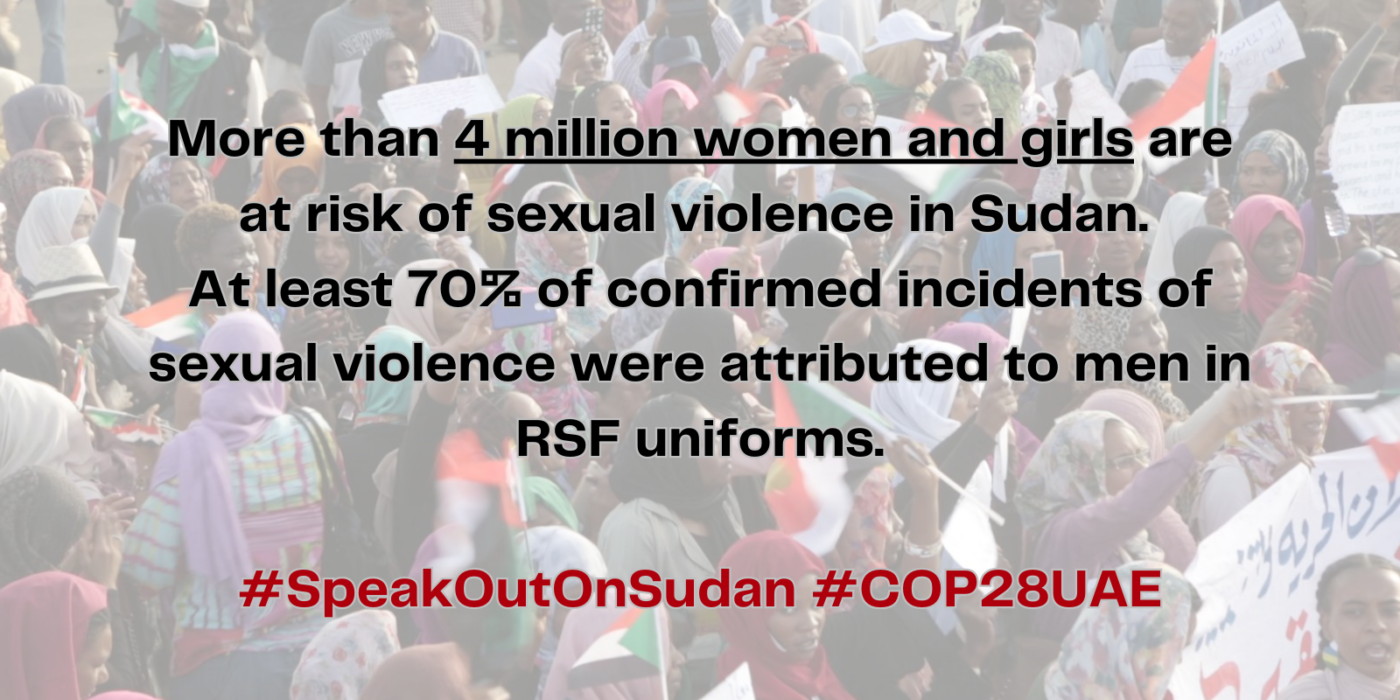
In such conflicts,  women often bear the brunt of violence and insecurity. For instance, as the war in Sudan rages on, gender-based violence (including conflict-related sexual violence) is a major concern, with an estimated 2.7 million women and girls at risk[5] due to the disruption of services and lawlessness as a result of the conflict. In Ethiopia’s Tigray region, 2,204[6] women and girls reported sexual violence to health facilities between November 2020 and June 2021. One of the one-stop centres reported that the victims in over 90% of cases were underage girls and estimated that visits to the centre had quadrupled since the conflict erupted in 2020.

Women in Africa continue to be relegated to the margins and their participation in peace negotiations is starkly hindered by the militarisation of peace processes. During the Luanda and Nairobi peace consultations on the situation in the Democratic Republic of Congo (DRC), women were significantly absent. Likewise, in the Chad peace talks in Doha in 2022, there was only one woman among the over 50 participants[7] present. In the current Sudan crisis, women have been significantly excluded from the formal ceasefire negotiations despite glaring evidence that they are effective in driving political transition and advocating for sustainable peace and stability.

The sobering reality in the DRC and South Sudan as the two countries prepare for elections serves as a stark testament to the persistent and deeply troubling trend of women’s ongoing exclusion from vital political processes. There are reports of rising violence against women, political leaders and activists in the DRC. Women also face barriers to vote, such as the lack of voter documentation required for registration and the general lack of information on electoral procedures, especially in the more isolated rural areas in North Kivu, Ituri and Mai-Ndombe which are currently under the control of armed groups.  Women voters in rural and remote areas in South Sudan still lack access to credible information about the electoral process. Refugees and internally displaced women face challenges of restricted mobility and the lack of necessary identification documents to register and participate in the election process.

As the world celebrates this day of non-violence and cessation of hostilities, we re-echo the ideals envisioned by the United Nations Security Council Resolution 1325 on Women, Peace and Security.  We emphasize that Actions for Women’s Peace include: advocating for women’s safe, meaningful and effective participation in peace processes as a fundamental component of sustainable peace; supporting efforts that prioritize non-violent conflict resolution and mediation, with a gender-sensitive approach that acknowledges the distinct experiences and needs of women in conflict zones; and standing against all forms of gender-based violence, including conflict-related sexual violence, which often escalates during conflicts, we therefore:

  1. Call for a shift towards promoting credible elections and good governance in Africa, including comprehensive electoral reforms, encompassing transparent voter registration and robust mechanisms to prevent electoral fraud which will strengthen the integrity of elections to increase public trust in democratic process. Strong institutions, the rule of law, and respect for human rights should also be promoted as fundamental components of good governance.
  2. Urge the prioritisation of inclusive and non-violent approaches to peacebuilding, with a central focus on dialogue as a means to achieve stable and sustainable ceasefires. These approaches should also aim to prevent the escalation of conflict and ensure the protection of civilians.
  3. Encourage governments to reduce military expenditures and redirect resources away from excessive military spending towards social services. This reallocation of resources should address the immediate needs of communities, rectify governance deficits, improve quality of life, and contribute to global stability.

[1] “SDG16+” refers here to the targets established under SDG16 as well as 36 targets from 7 other goals that directly measure an aspect of peace, justice or inclusion

[2] https://www.odi.org/sites/odi.org.uk/files/resource-documents/12424.pdf

[3] Global Disorder in 2022

[4]https://onpolicy.org/the-ukraine-russia-war-on-peace-and-security-challenges-in-africa/#:~:text=The%20Russia%2DUkraine%20war%20has,between%20Africa%20and%20the%20West.

[5] Sudan. 2022 HNO: IM Global GBV Country | Gender-Based Violence Area of Responsibility (gbvaor.net)

[6] Assessing the State of SRHR in Fragile and Conflict-Affected Countries in Africa

[7] 2022  Women and peace and security Report of the Secretary-General
Voices from South Kivu: Associations of Victims of Mass Crimes, Conflict Related Sexual Violence and Children born Out of Rape Meet AU Special Envoy on WPS to Advocate for Peace and Justice

Democratic Republic of Congo (DRC) has been a land marred by decades of conflict, instability, and the devastating consequences of war. Among the countless stories of resilience and hope emerging from this region, one group stands out – the associations of victims of serious crimes and conflicts, along with the children born of rape, in someites of South Kivu.

Read More “Voices from South Kivu: Associations of Victims of Mass Crimes, Conflict Related Sexual Violence and Children born Out of Rape Meet AU Special Envoy on WPS to Advocate for Peace and Justice”

Why Is the Maputo Protocol Important to women of South Sudan?

Photo by : African Union

South Sudan’s President, H.E. Salva Kiir, signed the Protocol to the African Charter on Human and Peoples’ Rights on the Rights of Women in Africa (Maputo Protocol), one of the most advanced treaties on the protection of women’s and girls’ rights anywhere in the world into law on 24th February 2023 which was later launched on 16 July 2023 in the country.

Read More “Why Is the Maputo Protocol Important to women of South Sudan?”

Putting Women at the Centre of South Sudan’s Peace and Security Agenda: Insights from Civil Society’s Engagement with the African Union’s Peace and Security Council

On 23rd February 2023, the African Union Peace and Security Council (AU PSC) met with civil society organizations, think tanks and faith-based organizations (FBOs) in Juba, South Sudan, to discuss the socio-political, economic and security situation in the country. Prior to the meeting, women-led civil society organisations (CSOs) held a preparatory meeting where they agreed on key issues of concern and the role of women in the implementation of the newly announced Roadmap to a Peaceful and Democratic end of the Transitional Period for peace.

Drawing on the discussions and recommendations put forward by the women-led CSOs during the engagement with the AU PSC, this information brief highlights key priorities for women in South Sudan’s peace and security agenda. It provides actionable recommendations for policymakers on how to strengthen the role of women-led CSOs in promoting gender equality and sustainable peace in South Sudan

CSO representatives nominated to present the identified issues to the Peace and Security Council were from Centre for Inclusive Governance, Peace and Justice, Women’s International Peace Centre and the Young Women’s Christian Association.

Download the Information Brief : WIPC_Putting Women at the Centre of South Sudan’s Peace and Security Agenda 1

Reflections of Women Peacebuilders on the Journey of Advancing the Women, Peace and Security Agenda in Burundi and DRC

BEFORE AND AFTER UN SECURITY COUNCIL RESOLUTION 1325

Democratic Republic of Congo- Reflections by Jolly Kamuntu

We live in conflict. It is the context in which we have evolved. The peculiarity of Eastern DRC is the battlefield, the rape capital of the world and a cemetery for journalists. Over the years the situation has taken different forms. Sexual violence before occurred during wars and was done by armed groups. Serial rapes were committed, women were buried alive and women were used as weapons of war. In reality, it was a message to the communities that if you do not surrender, if you don’t give in, women will be burned and buried alive.

Conflicts have set back the rights of women in DRC by 100 years. Conflicts made it possible for rapists to start trivializing sexual violence as more and more cases were reported and it was normalised. There is also lethargy at the national and international levels allowing leaders to not consider rape as an emergency.

This trivialization has tarnished the dignity of Congolese women. We must not be made to accept this into our culture. That is the fight we are taking on right now. I know there is rape and violence against women in other places, but not at the same rate and magnitude as in our case.

Women in DRC were the main victims of the different conflicts, the resulting insecurity. and the harmful effects of war despite not being consulted in the planning of armed violence.

We called for women to enjoy their right to security, especially in times of armed conflict. In such times, the protection of women and children must be given priority.

Before UNSCR 1325 our work as women’s rights defenders’ was challenged. People thought our demands and our plight were a joke. We had no clout. We did this because we were determined, and we are activists.

Even leaders would bring us down whenever we asked for backing. It was as if we were shouting in the desert and people were asking us where we had seen women participating in politics. They would tell us to leave decision making alone and concentrate on raising children.

However, when the UNSCR 1325 came in to support what we had been stressing, it was more acknowledged that women’s rights must be defended and recognised in conflict and post-conflict. Now we see that kind of disparaging language disappearing. When you quote frameworks like the UNSCR 1325, you can feel that they are afraid

Burundi- Reflections by Marie Louise Baricako 

UNSCR 1325 emphasises prevention, protection, participation and reconstruction. Currently, the problem that women face in Burundi is mainly being excluded from all processes.

Women are not formally involved in prevention and neither are they systematically involved in protection. In Burundi, we see more women active in civil society and fewer in public institutions.

Violence intimidates women and prevents them from participating. Women are going to tell you that they don’t want to take part in politics because politics is dirty, politics is full of lies, corruption and violence. All this discourages women.

There is no serene or safe space for the participation of women, and I believe that this is the main reason as to why they do not participate.

Generally speaking, and I say this because I am convinced of it and I would like it to change, you will see that in Burundi there exist symbolic women’s appointments: what matters is the number. Whether they participate or not, whether they are capable or not, that’s not the problem. It’s that kind of thinking – we were asked to get 30% and we are going to get 30%. Even if in parliament they don’t discuss issues, either they don’t understand, or they’re not interested… what matters, we’re going to put them there so that no one will accuse us of not

Major Milestones Over the Past Twenty Years

There have been improvements in terms of legislation. Key legal provisions have been put in place, in particular, the law that reprimands rape and sexual violence, the family law and the law on parity or representation of women, which has improved both local governance and decentralisation. This law provides
for 30 percent representation of women in government institutions.

In the DRC, women are increasingly becoming aware of and demanding respect of their rights. More women have started to report abuses committed by men. For example, in eastern DRC, after a series of awareness-raising campaigns on rape and sexual violence, many women broke the silence and talked about the challenges they encounter, and they exposed their tormentors without fear
of being arrested. As a result, certain practices that discriminate against women are being scaled back.

Inheritance or land ownership rights in favour of women are increasingly discussed within families. This was not the case prior to the UNSCR 1325. This change explains to some extent the shift in mind-sets that is gradually permeating behavioural patterns in the Burundian and Congolese societies.

Various campaigns launched in favour of women’s education have enabled many girls to attend school in large numbers. In terms of economic empowerment, women are already taking on some responsibilities through local economic structures such as MUSOs (Mutual Solidarity Associations) and AVECs (Village Savings and Credit Associations), which enable women’s groups to gain access
to financial power through group and rotational loans.

These mechanisms have enabled poor women excluded from the conventional banking system to gain economic power and engage in income-generating activities.

In Burundi, progress on the status of women can also be seen in the decline of the negative attitude that society has always had about women. It is mainly the negative stereotypes and prejudices that stigmatise women. However, just like in the DRC, the involvement of women in civil society structures and political parties has had a great impact in changing attitudes and mindsets.

The UNSCR 1325 brought forward women not only as beneficiaries of the peace process in terms
of improving peace and security but also brought about a paradigm shift by presenting women
themselves as agents of peace.

Note: This article is an extract from our Women’s World Issue 51