Amplifying Young Women’s Voice and Power in Peacebuilding Processes through Feminist Leadership Institute 2022

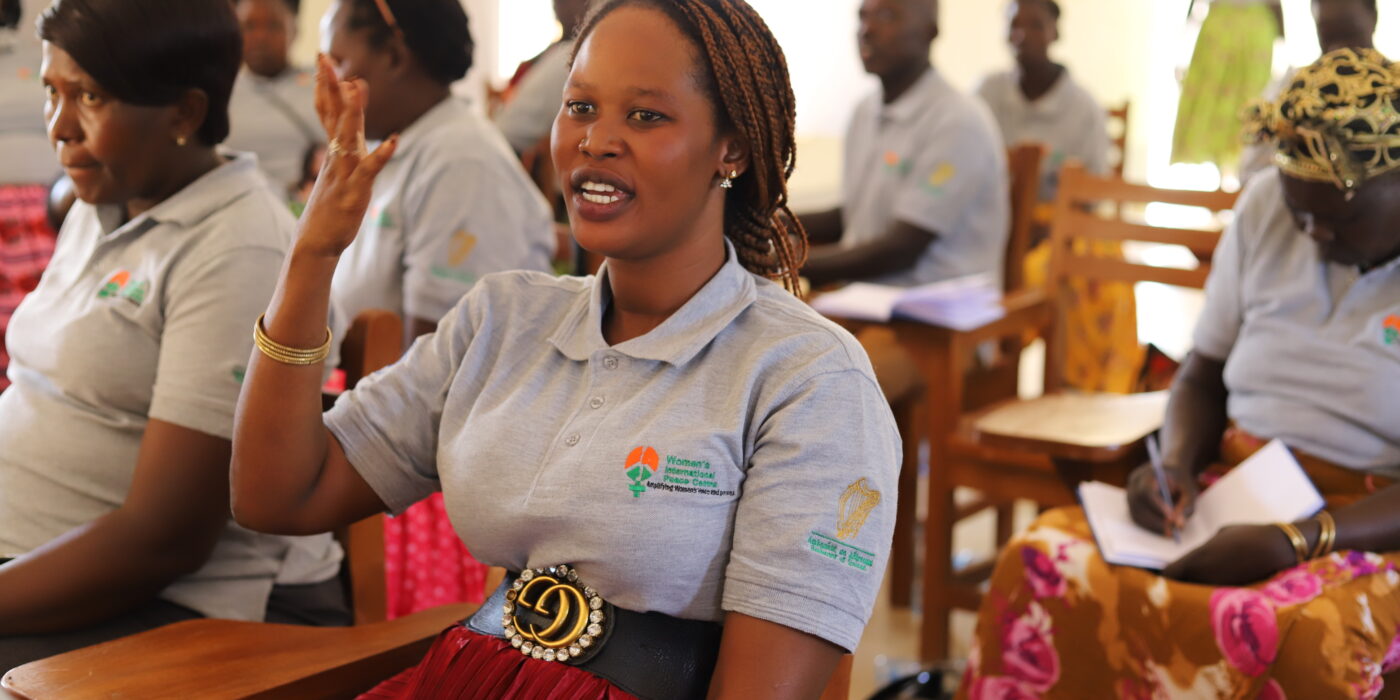
Recognising the importance of having women in positions of leadership and the critical role they play in efforts to promote stable and lasting peace, the Peace Centre conducted its Feminist Leadership Institute for 21 young women leaders from Burundi, Democratic Republic of Congo (DRC), South Sudan and Uganda.

The training was organised as a refresher training following an initial one that had been held in August 2022.

Conducted from 6th to 9th June 2022 under the theme; “Amplifying Young Women’s Voice and Power in Peace Building”,  the training aimed at enhancing
capacities of young women leaders as change agents in peace building and social transformation.

Participants noted that since the training in 2020, they had used the knowledge and skills they acquired to establish organisations, contest for political leadership and published articles about their leadership journeys, among others.

The Leadership Institute therefore deepened the young women’s understanding of the Women, Peace and Security agenda including National Action Plans; Peace and Conflict Management; Early Warning and Early Response; as well as their ability to organise collectively for instance on social media through feminist digital activism.

The training enhanced the capacities of the young women leaders to promote and protect their rights, and to use resolutions to hold duty bearers accountable and find peaceful solutions to conflicts in their communities.
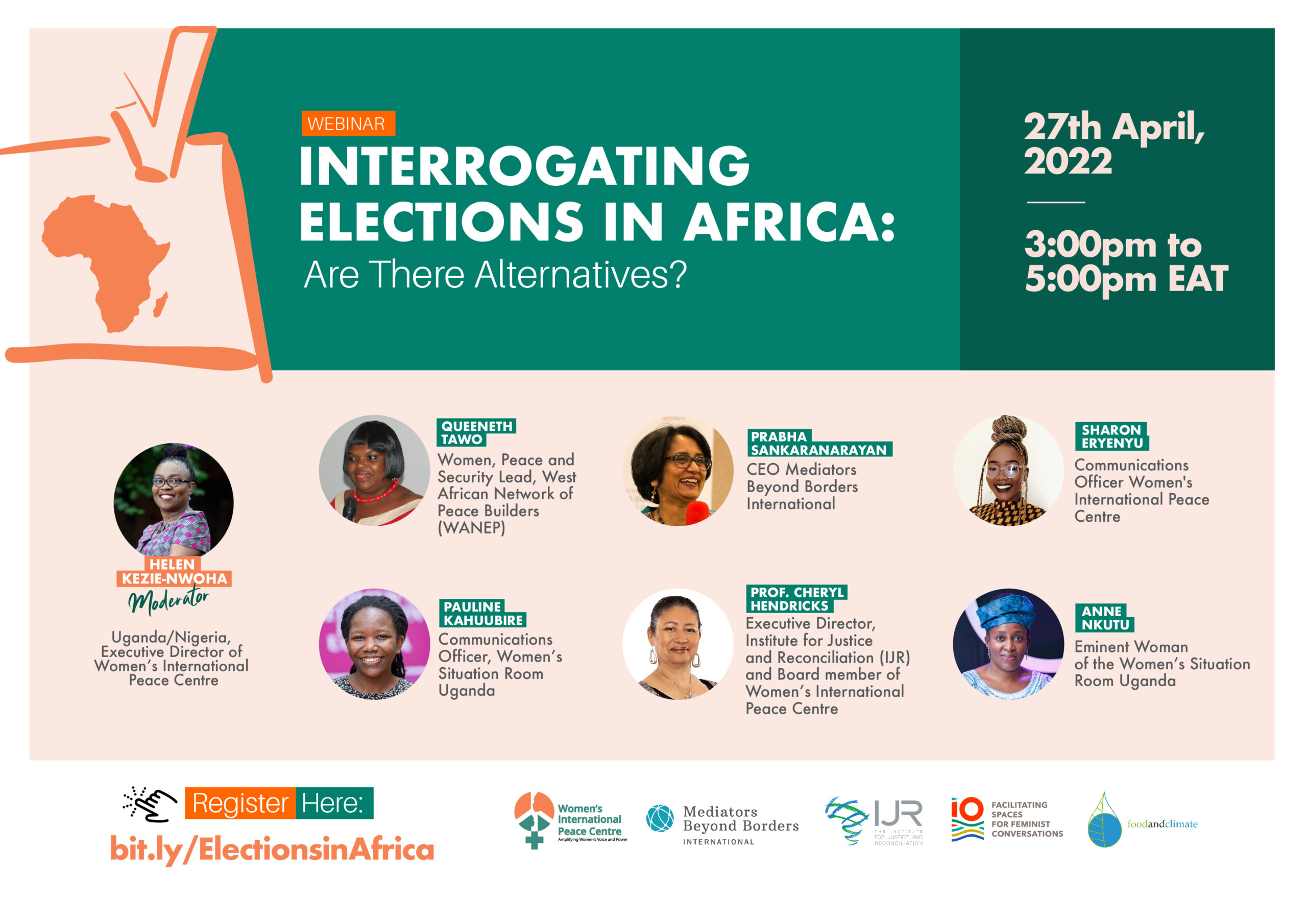
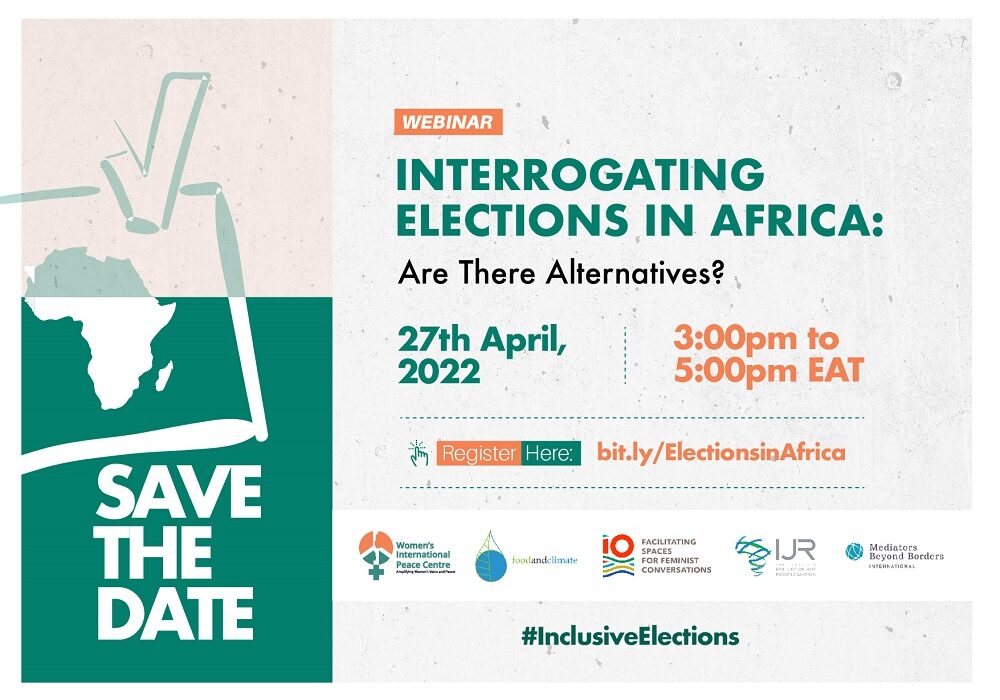
Interrogating Elections in Africa: Are there alternatives?

Elections are a key ingredient of democratic governance and women’s political participation is seen as a prerequisite for any truly democratic process. The discipline of acquiring power through an election is assumed to make governments accountable to citizens and confer legitimacy. However, in the absence of women’s full and equal participation as voters, political candidates, critical actors in the electoral processes and, elected office, governments cannot claim to be fully accountable to citizens. Women’s leadership and participation are expected to not only determine the dynamics and distribution of political power but to be active participants in all activities of political parties thereby shaping the nature of institutions that wield political and economic power.

Read More “Interrogating Elections in Africa: Are there alternatives?”

Advocacy Training for The Implementation of United Nations Security Council Resolution 1325 On Women, Peace and Security, In Goma, Democratic Republic of Congo

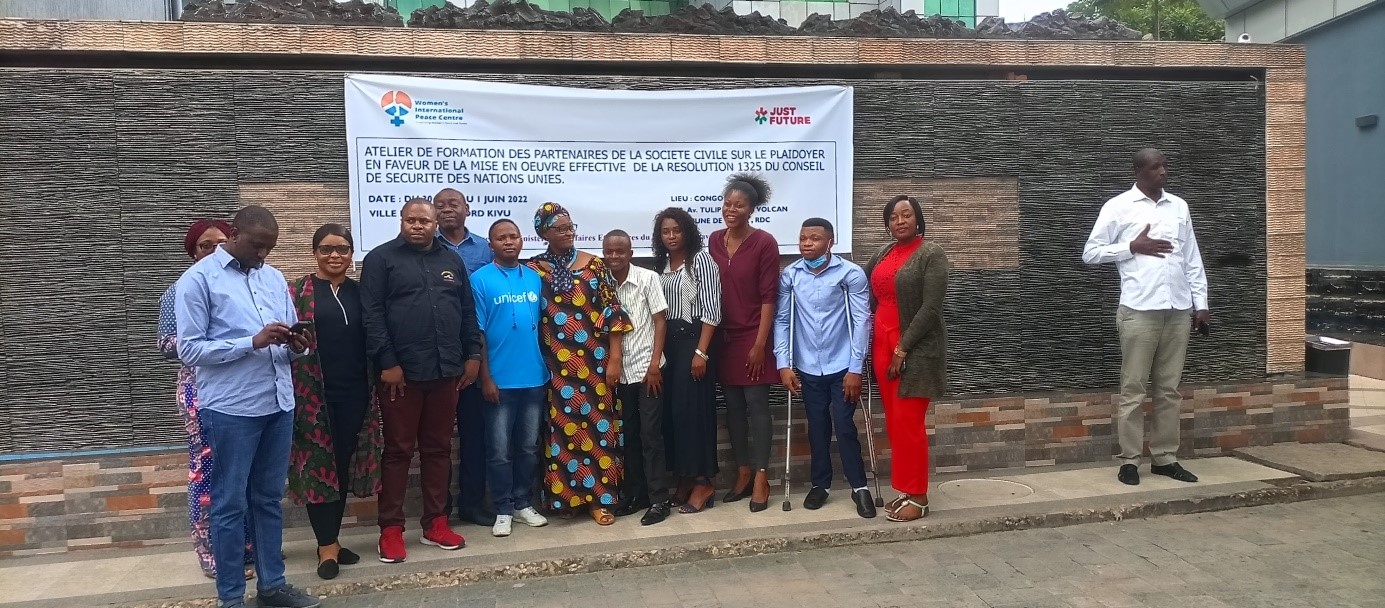
 From May 30 to June 01, 2022, Women’s International Peace Centre conducted a 3-day training for civil society organizations involved in the implementation of the Just Future program under the theme “Advocacy for the implementation of United Nations Security Council Resolution 1325 on women, peace and security”. 

The training which was attended by 14 people aimed at strengthening the knowledge of the participants on Resolution 1325 and its intersectionality in their programs; improve the capacities of Just Future partner organizations in lobbying and advocacy techniques; and enable them to develop a collaborative approach with regional mechanisms around the Women, Peace and Security agenda.

During the meeting, participants carried out an analysis of the context of the implementation of the resolution in the DRC according to the pillars of participation, protection, prevention and community recovery. The trainees also participated in follow-up of exchanges of practical experiences on the implementation of the resolution by local partner organizations and a simulation exercise. These were later grouped into 3 classes according to the 3 trajectories of the program who presented strategies on how they intended to do lobbying and advocacy in the respective areas of intervention.

The training encouraged alliance building as an advocacy strategy at the community, national and regional levels. Participants were encouraged to form alliances with other organisations that share the same challenges or that can be influenced to support their planned action so as to have successful advocacy. At the end of the training, participants developed action plans for implementing UNSCR 1325 in their respective areas of work.

Training Women Peace Mediators in Kotido and Moroto

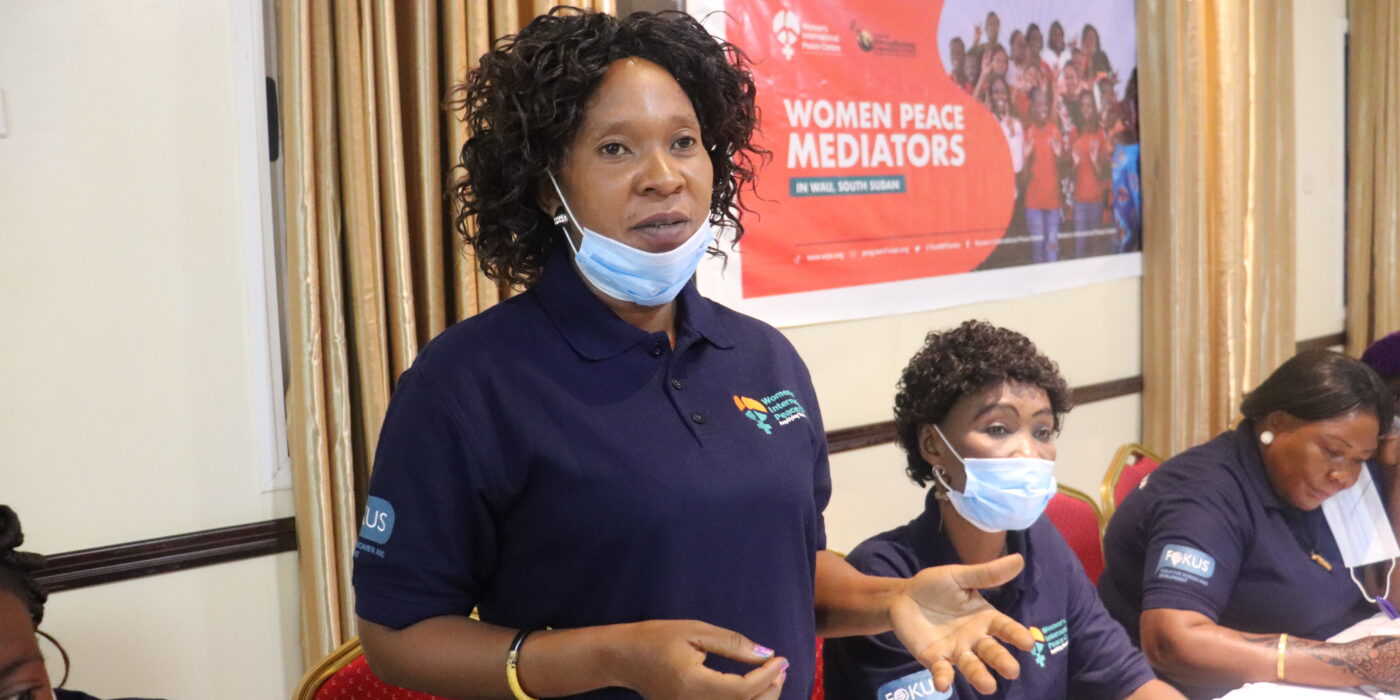
Women’s International Peace Centre (The Peace Centre) and the Uganda Women’s Network (UWONET) with support from The Embassy of Ireland are partnering in an 8-month project “Women at the Centre of Sustaining Peace in Uganda” to promote the implementation of Uganda’s National Action Plan III (2021 – 2025) on Women, Peace and Security (WPS) at the national level and in Karamoja, particularly Kotido and Moroto districts.

From 11th to 13th and 19th to 20th May 2022, The Peace Centre in partnership with Uganda Women’s Network (UWONET) conducted trainings of peace mediators in Kotido and Moroto respectively. The trainings were carried out with the objective of enhancing peace mediators’ capacity with peacebuilding and conflict transformation skills such as mediation, negotiation, safety and security, wellness and advocacy so as to contribute effectively to peace.

In Kotido, 55 peace mediators (47 females and 8 males) from sub-counties of Rengen, Panyagara, Nakapelimolu and Kotido Municipality were trained whereas 51 (32 females and 19 males) from the sub-counties of Tapac, Loputuk/ Nadunget, Katitikekile and Moroto Municipality were trained in Moroto.

Sessions of the trainings focused on building an understanding of the NAP III while unpacking its background, relevance, pillars as well as its key components on Women, Peace and Security Agenda.

Discussions also highlighted the need for all respective actors to work together to support and invest in participatory processes, social accountability tools and localization initiatives in order to ensure the successful implementation of the NAP III.

Similarly, sessions unpacked the draft national peacebuilding and conflict transformation policy while exploring its development process, overall objective, relevance and rationale to the stakeholders.

As a result, the trainings increased knowledge among citizens and popularised the United Nations Security Council Resolution 1325, the Uganda National Action Plan (NAP) III on Women Peace and Security, the 2015 draft national Peace Building and Conflict Transformation Policy as well as enhanced peacebuilding skills among the peace mediators.

This has in turn increased women’s contribution to peace in Karamoja region through awareness sessions, dialogues, peer to peer lobbying as with the campaign towards the disarmament process.

At the end of the training, peace mediators generated community action plans to harness awareness and peacebuilding efforts at the community level. The action plans developed included; community meetings to review peace matters, awareness raising through music, dance & drama and to pass peace messages, conflict monitoring and reporting, peace dialogues, community outreaches for lobby among peers not to engage in conflicts, supporting the ongoing disarmament exercise and disseminating the NAP III to the political and technical planning teams.

Training Women Peace Mediators; Strengthening Capacities for Women’s Effective Participation in Conflict Prevention and Peacebuilding in South Sudan

Through implementing the project “Strengthening Capacities for Women’s effective Participation in Conflict Prevention and Peacebuilding in South Sudan (2022)”, the Women’s International Peace Centre project seeks to strengthen the capacity of women in South Sudan to mitigate conflict and sustain peace through enhancing their peace building skills.

Read More “Training Women Peace Mediators; Strengthening Capacities for Women’s Effective Participation in Conflict Prevention and Peacebuilding in South Sudan”

Civil Society Organisations’ Training On Peacebuilding, Gender-Sensitive Programs, and Advocacy for The Effective Implementation of United Nations Security Commission Resolution 1325 in Kinshasa, Democratic Republic of Congo

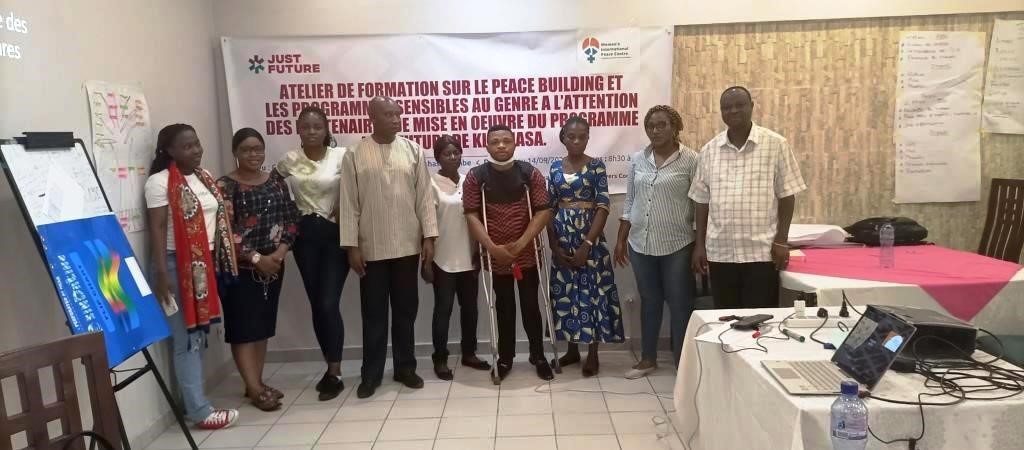
From 12th to 14th  April, civil society organizations in the Democratic Republic of Congo involved in the implementation of the Just Future program were trained on consolidation of peace, gender-sensitive programs, and advocacy for the effective implementation of United Nations Security Council Resolution 1325 on Women, Peace and Security by Women’s International Peace Centre.

The 3-day training took place in Kinshasa and brought together 13 participants including 7 women and 6 men with the main objective of providing knowledge and skills to partner civil society organizations for the integration of gender in their policies and interventions. 

The training was based on the andragogical method which allowed the partners to participate in the planning and evaluation of their learning. It was participatory, interactive and involved cross-sectional discussions to allow participants to contribute to their own understanding of the theme.

At the end of the training, the 13 participants had a better understanding of the basic concepts of gender equality in development; had the methodological tools to improve the integration of gender equality in the design, planning, execution, monitoring and evaluation of community-based projects in the internal functioning of their organizations and adopted gender-sensitive behavior including positive masculinity.


Enhancing the Capacity of Young Women Leaders on Physical and Digital Protection

Digital security is of serious concern, especially since people spend more time online than ever. COVID-19 pandemic led to isolation and social distancing measures which meant that everyday activities like work and schooling were shifted online. The presence in digital spaces increases exposure to digital threats, which in turn creates the need for greater awareness of how to safely navigate the online world. From 23rd to 25th March 2022, the Peace Centre organised a physical and digital protection training.

Read More “Enhancing the Capacity of Young Women Leaders on Physical and Digital Protection”

Women Peace and Security Reflection Workshop on NAP III Implementation, Progress, Gaps and Opportunities.

The Government of Uganda through the Ministry of Gender Labour and Social Development (MGLSD) launched the third National Action Plan (NAP) III on Women, Peace, and Security on 8th March 2021 amidst COVID- 19 restrictions which was hugely consultative.

It is in this regard that the Women’s International Peace Centre in collaboration with Coalition for Action on 1325, and its partners convened a National Women, Peace and Security Forum on 22nd April 2022 in Kampala to achieve the following objectives;

  1. Increase knowledge and understanding of the M&E framework for NAP III
  2. Document what has been achieved and lessons learnt in the first year of the NAP implementation
  3. Cross-learning with women peacebuilders from other East African countries for more effective WPS implementation.

The forum brought together 96 participants (75female and 21 male) from different sectors including Ministries Departments and Agencies, UN Agencies, Embassies, NAP III Steering committee members, Security institutions, Local Government, Civil Society Organisations (CSOs) at the national level and grass root level, the academia, the media, youth peace ambassadors and international WPS players from Kenya, Democratic Republic of Congo and South Sudan.

It also facilitated a review and discussed progress, challenges, emerging issues and recommendations to improve the NAP III implementation process after one year of its launch in 2021.  This increased knowledge and understanding of the monitoring and evaluation framework for NAP III, documented key achievements and lessons learnt and facilitated cross-learning with women peacebuilders from other East African countries for more effective Women Peace and Security implementation.

Discussions from the meeting provided a platform for different players from Kenya, South Sudan and Uganda to share experiences in terms of best practices, progress made, challenges and recommendations to best implement National Action Plans on Women Peace and Security agenda. This aimed at inspiring and increasing understanding of what is being done by different stakeholders and countries to best implement the WPS agenda.

By closure of the forum, commitments were made by different partners including leaders of CSOs, UN Women, Austrian Development Agency, Ministry of Gender, Labour and Social Development with each committing to play a significant and unique role in the implementation of the NAP III. These commitments included; continuously working with international agencies, CSOs, and local governments to find lasting solutions to the increasing number of refugees in Uganda, working with the government of Uganda through MGLSD and CSOs to increase funding for effective implementation of NAP III through localization and other strategies, increasing efforts through CSOs and government towards addressing crisis including teenage pregnancies in Uganda to mention but a few.


UN Commission on the Status of Women 66: Advancing Feminist Peace in the Context of Climate Change

What does advancing Feminist Peace in the context of climate change look like?

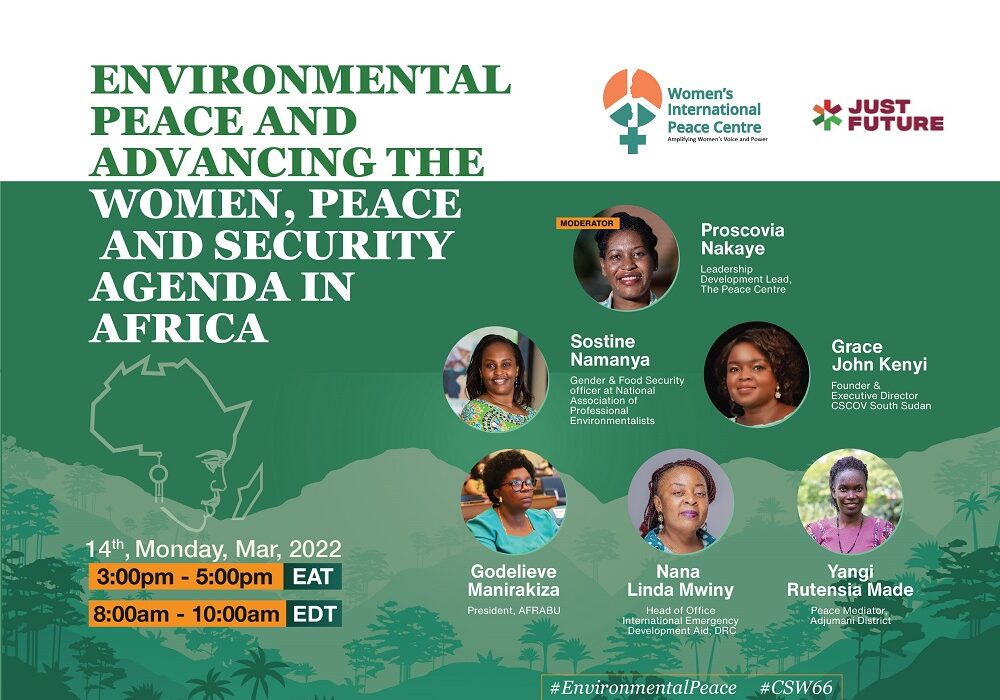
Women’s International Peace Centre hosted a parallel event on 14th March at the 66th United Nations Commission on the Status of Women to further discussions on gender equality as it relates to climate change and environmental risk reduction within conflict-affected settings with a focus on women’s experiences and recommendations for advancing peace in this context.

Read More “UN Commission on the Status of Women 66: Advancing Feminist Peace in the Context of Climate Change”