COVID-19 and Funding Local WROs Policy Brief

Local women-led organisations (WLO) and women’s rights organisations (WRO) play critically important roles in crisis response, but their efforts often lack both political and financial support. On 16th July, the UN launched an updated Global Humanitarian Response Plan (GHRP) for COVID-19. Women’s International Peace Centre took part in this survey led by CAFOD, CARE International UK, ActionAid, Danish Church Aid and Oxfam who partnered with local WLO and WRO partners in Lebanon, Jordan, Bangladesh, Uganda, the Democratic Republic of Congo (DRC), Kenya, Nigeria, Occupied Palestinian Territories and South Sudan to gather a snap-shot of the Covid19 response to date in terms of access to funding, partnerships and decision-making for WLO/WROs.

The joint policy brief summarises findings and recommendations on direct funding to these groups, indirect funding via international intermediary organisations (including UN agencies and INGOs), their participation in humanitarian coordination processes and post-COVID19 recovery. 

Monthly District Peace Committee Meetings in Kotido, Yumbe and Adjumani

From 19th to 25th June 2020, The Peace Centre facilitated the meeting of District Peace Committee meetings that had a total of 142 (42 females and 100 males) participants. The meetings provided platforms where Women Peace Mediators presented women peace and security concerns including; the impact of COVID 19 on women, increasing conflicts in the project districts that called for the safety of women and girls, spaces for women’s participation in peacebuilding, peace meetings and complete disarmament, protection of the unprotected kraals, tracking and recovery of stolen animals, need to resume peace initiatives since the Warriors took advantage of the lockdown and conflicts escalated.

Read More “Monthly District Peace Committee Meetings in Kotido, Yumbe and Adjumani”

Tracking Trained Women Leaders in Bukavu, DRC

In June, women leaders who were trained by the Peace Centre, Karibu Jeunesse Nouvelle (KJN) and Association des Femmes des Medias (AFEM) on practical strategies to promote women’s participation in post-conflict governance in 2019 were interviewed to track their progress. The training aimed at strengthening the capacity of women leaders to engage in and influence post-conflict decision-making and governance as well as demand accountability from policymakers towards actualizing the meaningful inclusion of women in governance and decision making in the Democratic Republic of Congo.

Since 2019 the trained women leaders, have held community awareness sessions and dialogues on the need for women’s participation at all decision-making levels; the rights and responsibilities for women and girls, and sexual and gender-based violence (SGBV) and also mitigated land conflicts. The awareness sessions also targeted schools and Universities, encouraging young women to join politics, to position themselves in leadership structures and the political system in preparation for the 2023 legislative elections. As a result, 5 young women joined the communication unit of the Union for Democracy and Social Progress Party (UDPS).

Thanks to Bukavu’s training, I feel very equipped and reassured. When my UDPS Party was coming to implant up in my community, I used all the strategies learnt to position myself. I grab a strategic position in this party, I am now the President of the party’s women’s league in my locality. Now it is me who will be identifying and recruiting other women to join and advocate for their interests. Bora – Elysée

Although women constitute the highest statistic demographically compared to men (52%), this has not been influential in terms of their political participation. Several factors justify this including; traditional and cultural barriers with their consequences on women’s perceptions and self-esteem
and gender-based violence; poverty and illiteracy, insufficient resources allocated to women’s leadership structures and weak coordination of
women’s organizations, Persistent discrimination against women in the legal framework and non-compliance, instability, political tensions and the existence of conflict zones (Kasai, Tanganyika, South Kivu, North Kivu, Ituri). In light of this situation, the training contributed to the awareness of women leaders in South Kivu on this situation and build their capacities and skills to improve on their representation.

The women leaders at the June 2019 training institute not only learnt more about transformation leadership, women’s political leadership and UNSCR 1325 but they also shared their experiences as women’s rights activists, the lessons from their work in their communities as well the benefit of their leadership experiences both good and bad. During this institute, they strengthened their network of women leaders in the province.

Unheard Unseen: A COVID-19 briefing

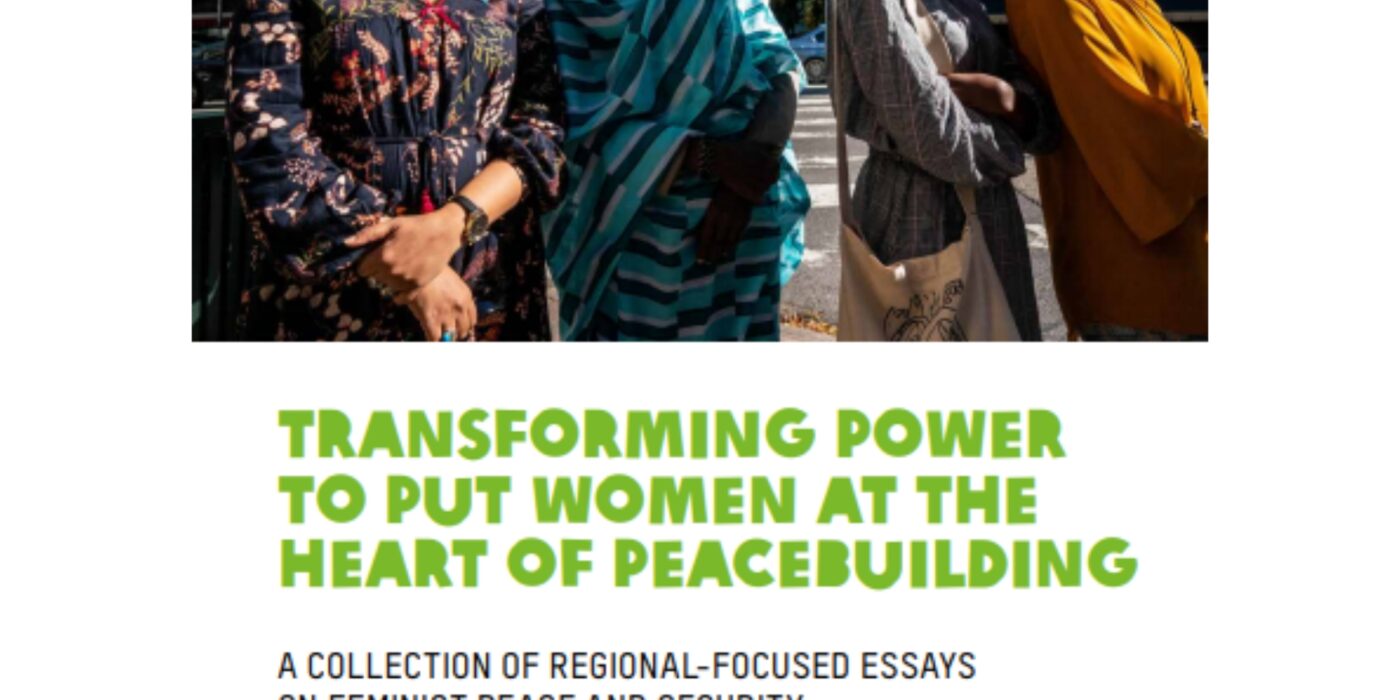
A resource by Women for Women International on ensuring the inclusion of marginalised women in fragile and conflict states in COVID-19 prevention, response and recovery.

‘Unheard. Unseen.’ identifies five priority action areas and provides analysis and recommendations on the important policy changes that are so urgently needed for marginalised women affected by conflict. The report, also outlines how important it is to create space for marginalised women in conflict-affected countries to share their experiences and influence change.

Planning Meeting for Leadership Development Activities in the Democratic Republic of Congo and Nepal.

The Peace Centre, Karibu Jeunesse Nouvelle (KJN) and Association des Femmes des Medias (AFEM) work in partnership to strengthen women’s capacity as change agents in peace building and post-conflict governance in South Kivu, Eastern D.R.C. On 29th May an online meeting was held for partners to assess the current situation as impacted by COVID-19, understand the implications for planned activities and agree on a way forward. With a steep increase in gender-based violence, women’s exclusion from decision-making on COVID-19 response and limited access to information on preventive measure, the partners agreed to prioritise addressing these issues. As a result, the meeting defined future activities to include, translating key messages on COVD-19 prevention into local languages, radio talk shows and community meetings by women peace builders to sensitise the public on COVID-19. The Peace Centre also committed to conduct a training webinar on wellness and self-care to support the wellbeing and work of women human rights defenders (WHRDs) in Bukavu.

On 16th June, the Peace Centre and National Alliance for Women Human Rights Defenders (NAWHRD) Nepal also held an online meeting to discuss the current COVID-19 dynamics and prepare for the upcoming training of Deputy Mayors and District Vice Chairpersons in Kathmandu on gender budgeting, gender-responsive district planning and wellness under the theme Transformed Leadership for Transformation. The partners agreed on a timeline and methodology for the planned profiling of the work and impact of the institute’s alumnae in Nepal since 2007 including the previously trained Deputy Mayors and District Vice-Chairpersons.

Sexual Violence Against Women and Girls Refugees in the time of COVID-19

By Helen Kezie-Nwoha

2020 marks the sixth global annual International Day for the Elimination of Sexual Violence in Conflict. This year has been particularly challenging for the entire world with the COVID-19 pandemic but much more for women and girls’ refugees, who are already living in very difficult circumstances with limited access to social services and livelihood options. COVID-19 and the measures put in place by governments to curb its spread has led to increased human rights violations and particularly painfully, to sexual violence against refugee women and girls’. Despite the March 23, 2020, global call for ceasefire by the UN Secretary-General, conflicts have continued in many countries exposing women and girls to displacements and increased risk of sexual violence. This is not to say that it is absent in so-called peaceful countries; in fact, sexual violence has increased globally due to COVID-19. This blog discusses sexual violence against refugees women and girls in the time of COVID-19.

Read More “Sexual Violence Against Women and Girls Refugees in the time of COVID-19”

Community Dialogues on Transitional Justice in Northern Uganda

Between 6th and 10th June, The Peace Centre partnered with District Local Governments of Lira, Soroti, Gulu, Arua, Kotido and civil society partners (Teso Women’s Peace Activists (TEWPA) in Tubur, Soroti, Nakere Rural Women Activists (NARWOA) in Panyangar, Kotido, Refugee Law Project in Awach-Paibona, Gulu, African Youth Initiative Network (AYINET) in Ogur, Lira and Uganda Victims Foundation in Dadamu, Arua to conduct 5 community dialogues at sub-county level on Transitional Justice.  These gathered 75 local leaders and community members (especially women and victims’ representatives) to raise awareness of the Transitional Justice Policy, reflect on the radio poll questions, discuss key post-conflict concerns and make specific recommendations to leaders.

These community dialogues provided an opportunity for off-air discussions with community members whose voices were typically excluded from radio discussions and responses to polls, which required access to mobile phones, radio, and time away from domestic tasks occurring during radio prime time. Specifically, the dialogues sought to engage, capture and amplify the
voices of victims/survivors at the grassroots level, including typically excluded groups such as women and persons with disability to discuss their post-conflict concerns and engage their leaders to take action.

The Kotido Resident District Commissioner, Chief Accounting Officer and Regional Police Inspector provided an update on compensation cases, acknowledged challenges in the justice system and committed to following up on documented violations such as cattle raids, domestic violence and gender-based violence to ensure action is taken and provide updates. In Lira, the Community Development Officer and LC 3 Chair person committed to engage cultural leaders and Parish Chiefs to follow up on the cases of evicted formerly abducted women and children in Ogur sub-county and ensure their return to the land.

Virtual Consultation: Women and Youth Exchanging Lessons for Peace and Security

The Peace Centre on 12th June joined the African Union Youth Envoy, the African Women Leaders Network (AWLN), Zimbabwe Young Women’s Network for Peace Building and ACCORD South Africa to discuss conflict prevention and mitigation as well as the implications of the COVID-19 pandemic on the strategies and work of women and young women peacebuilders. The online conversation included reflections on how the women, peace and security and youth peace and security frameworks can be used to tackle the impact of COVID-19. 

COVID-19 has taught us to rethink the Youth Peace and Security Agenda to the Youth, Peace and Development agenda. Exclusion of youth has not worked and we need to move the narrative from youth as perpetrators of violence to youth as agents of Peace.- Aya Chebbi, AU Youth Envoy

It is time we change the approach to peacebuilding; we need to make sure that there is a deliberate and conscious effort that Women Peace and Security is equal to the Youth Peace and Security agenda. We must not replicate the discrimination against women to young women.- Helen Kezie-Nwoha, Executive Director, Women’s International Peace Centre

The only way that we will be able to deliver on the Youth Peace and Security agenda and the Women Peace and Security agenda is when we come together. But this will require Africa’s Governments to help us overcome divides created by weak infrastructure. – Verlaine-Diane Soobroydoo, Policy Advisor on Women Peace and Security Focal Person, African Women Leaders Network.

We need to be inclusive and understand the unique challenges and opportunities for grassroots organising- Pravina Makan-Lakha,, General Manager Operations, ACCORD.

The need to engage more of the grassroots community youth mediators especially young women to build sustainable peace is the way to go.- Natasha Mutuwa, Coordinator, Young Women’s Network for Peace.

The Peace Centre shared from the experience of on-going work with women peacebuilders and Women Mediators Networks in refugee settlements and hosting districts in Uganda. Participants in the dialogue also discussed the impact of the pandemic on the Women Peace and Security (WPS) agenda and explored opportunities to develop resilience and move the WPS agenda forward.

Voices of Refugee Women on COVID-19 in Uganda.

Uganda currently hosts over 1.4million refugees and asylum seekers under her open-door policy according to Uganda Comprehensive Refugee Portal. 82% of them are women and children and approximately 61.8% of all refugees are from South Sudan. COVID-19 has forced a lot of changes to the world we live in. Refugees already far away from home, are having to cope with lockdown restrictions, food reductions amidst the pandemic. They face immense and unique challenges that make some communities more vulnerable to infectious diseases – from living in close quarters to lack of clean water for handwashing.  This pandemic, therefore, presents a worrying situation for the refugees in Uganda as the country is under lockdown; social distancing is almost impossible, food distribution and access to necessities such as health care are curtailed by the movement restrictions resulting from the lockdown and evening curfews hence worsening the pre-existing challenges in settlements.

“Covid 19 lockdowns and quarantines seem to be reducing crime rates outside. But inside- at home- increased rates of domestic abuse are a reminder of another kind of global pandemic; violence against women and children.” – Mona Elthaway

As COVID-19 threatens refugee settlements around the world, it is becoming more urgent to listen to the voices of women to better understand their needs and coping strategies during this period. Listen to our mini-podcast series that gives you a brief look in the world of the refugee women coping and surviving COVID-19 in Nyumanzi and Bidibidi settlements in Uganda here


Catching Up with Our Leadership Institute Alumna- Martine Kaliza Mirindi

Martine Kaliza Mirindi is an alumna of the 2013/14 Leadership Institute promoting women’s and girls’ rights and advocating for peaceful resolution of conflicts in North Kivu province of the Democratic Republic of Congo. She is the founder of Women for Democracy and Fight against Violence (WDFV), is very passionate about serving and defending the rights of the most vulnerable. Martine holds an Advanced Degree in Law, specializing in Private and Judicial law from Université Ouverte/CIDP-Nord –Kivu completed in 2007 Martine intends to join political leadership to apply her innovative ideas for the common good of the people of the DRC. She is also passionate about a number of things including love, nature, music, drama, dance.  

Martine, the Natural Leader

“I am passionate about feminist leadership and often I think for me it was inborn because even in our family, there is no decision that can be taken without my say. This applies to my work as well as in all the associations and groups where I belong, I am always chosen as a leader. I believed that the institute would help me to gain sufficient knowledge and the necessary tools on leadership.”

Participating in the 2013/14 Leadership Institute on Peace Building and Human Security

Martine chose to take part in the institute in order to enhance her leadership and peace building skills but also understand the experiences of other women leaders. The institute lived up to her expectations and she readily lists some of the key lessons that are maki a difference in her work.

“I clearly understood, what it means to be a leader, how one becomes a leaders and ways to overcome our challenges as women leaders. The facilitators positively impacted my time with the institute.We always had to give feedback about what we had learnt during the training and mine was always positive feedback. It was quite a good interaction because it strengthened both the young women and senior members of civil society organizations in the training.

Following the training, Martine was able to work out different strategies in order to succeed even in small things that she often neglected but were very important for the community. She raised awareness among women who were not formally educated, to get them involved in public life at the grassroots level. Martine replicated her institute experience and focused on strengthening the women’s leadership skills for the benefit of the community.

Challenges of Women’s Leadership

Despite her passion and drive, Martine talks about the challenges demoralizing women peace builders. She mentions stigma, the lack of meaningful progress in the fight to promote women’s rights, and some men who are opposed to the common cause of women’s empowerment.

“In order to overcome these challenges, we have been organizing meetings among women themselves as well as those with men in order to discuss and share knowledge on themes about women’s rights advancement. It has helped a lot in bringing cohesion and harmony as well as leading to some men to be part of the women’s cause.”

Martine has several plans and dreams for African women, for instance, giving them the opportunity to design projects and receive support to meet the needs of vulnerable people. She hopes to use all she has learned from various trainings to contribute to enriching women’s work.

I have attended several training sessions at the national level in Kinshasa, at the provincial level in Nord Kivu and South Kivu as well as on the international level in Burundi, Rwanda, Thailand and Uganda. The trainings focused on advocacy, electoral processes, gender-based violence, UNSCR 1325, civic education, gender and elections, restorative justice, gender and protection, leadership and gender mainstreaming in projects.

 Advice to Younger Women Leaders

Martine advises, “In order to be able to participate in the decision making processes, join non-violent movements, women groups or political parties. Engage in entrepreneurship so as to economically empower yourself as a young leaders. Consider attending the Leadership Institute.”

In closing, Martine highlights the importance of solidarity among women as critical to promoting gender equality in professional life and in day to day activities.