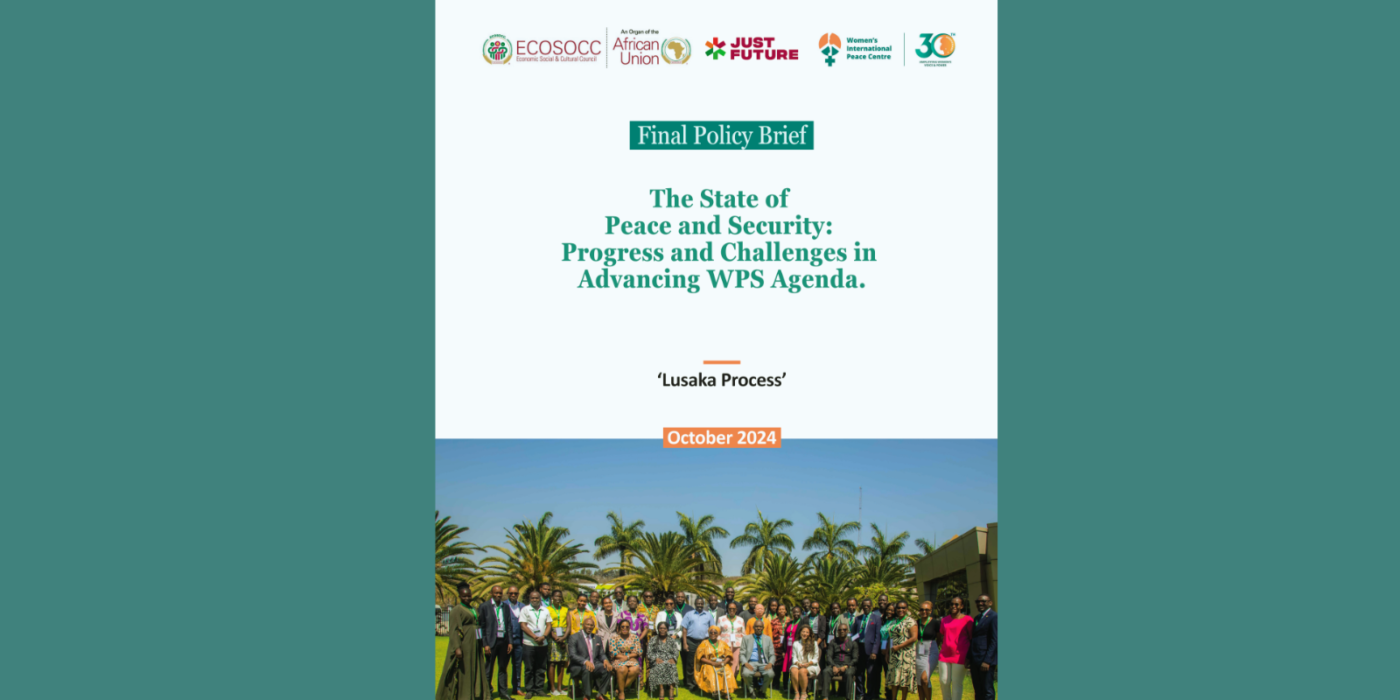
The State of Peace and Security: Progress and Challenges in Advancing the WPS Agenda

This policy brief examines the evolving peace and security landscape in Africa, highlighting the complex challenges shaping the continent today. Ongoing conflicts, terrorism, environmental crises, and emerging cyber threats continue to undermine stability, hinder development, and deepen humanitarian crises. In response, the African Union, its Member States, and civil society organizations play a critical role in addressing these challenges through diplomatic, security, development, and community-based interventions. Civil society in particular remains central to grassroots conflict resolution, peacebuilding efforts, and the promotion of inclusive governance and human rights.

The brief also explores key drivers of instability across regions such as the Sahel, the Horn of Africa, and parts of Central Africa, where armed insurgencies, political unrest, and unconstitutional changes of government have weakened democratic institutions and displaced millions. Groups such as Boko Haram, Al‑Shabaab, and affiliates of Islamic State have further destabilized vulnerable regions, while climate change continues to intensify resource conflicts and human displacement. The policy brief emphasizes the importance of inclusive peace and security responses, highlighting the vital role of civil society—particularly in advocating for the rights and leadership of women and girls—to ensure sustainable and people-centered peace solutions across the continent.

Download Policy Brief:

L’État de la Paix et de la Sécurité: Le Progrès et les Défis dans la Mise en œuvre du Programme Femmes, Paix et Sécurité

Cette note de politique examine l’évolution du paysage de la paix et de la sécurité en Afrique, en mettant en lumière les défis complexes qui façonnent aujourd’hui le continent. Les conflits persistants, le terrorisme, les crises environnementales et les menaces émergentes liées à la cybersécurité continuent de fragiliser la stabilité, d’entraver le développement et d’aggraver les crises humanitaires. En réponse, l’Union africaine, ses États membres et les organisations de la société civile jouent un rôle essentiel pour relever ces défis à travers des interventions diplomatiques, sécuritaires, de développement et communautaires. La société civile, en particulier, demeure au cœur de la résolution des conflits à la base, des efforts de consolidation de la paix et de la promotion d’une gouvernance inclusive et des droits humains.

La note de politique analyse également les principaux facteurs d’instabilité dans des régions telles que le Sahel, la Corne de l’Afrique et certaines parties de l’Afrique centrale, où les insurrections armées, les troubles politiques et les changements anticonstitutionnels de gouvernement ont affaibli les institutions démocratiques et déplacé des millions de personnes. Des groupes tels que Boko Haram, Al-Shabaab et les affiliés de l’État islamique ont davantage déstabilisé les régions vulnérables, tandis que le changement climatique continue d’intensifier les conflits liés aux ressources et les déplacements de populations. Cette note de politique souligne l’importance de réponses inclusives en matière de paix et de sécurité, en mettant en évidence le rôle essentiel de la société civile — en particulier dans la défense des droits et du leadership des femmes et des filles — afin de garantir des solutions de paix durables et centrées sur les populations à travers le continent.

Télécharger la note de politique: L’État de la Paix et de la sécurité – -_compressed

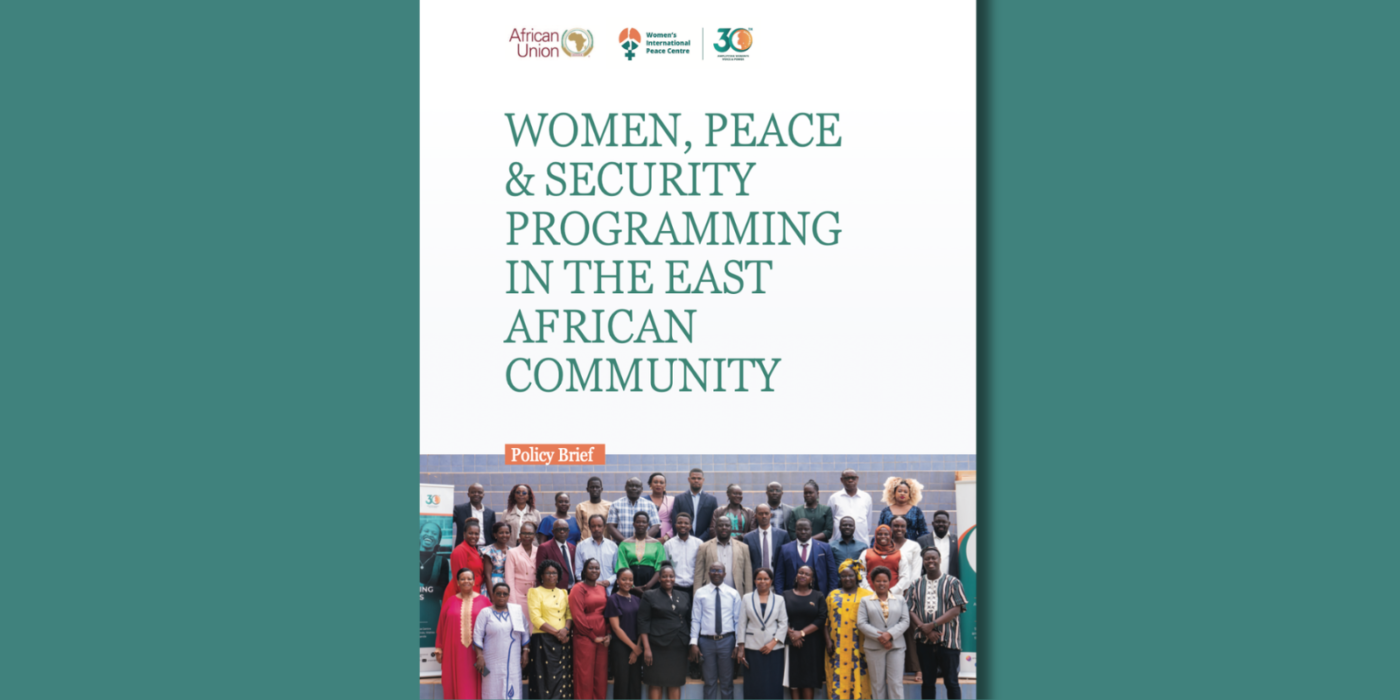
Women, Peace and Security Programming in the East African Community

This policy brief examines the implementation of the Women, Peace and Security (WPS) agenda in the East African Community (EAC), focusing on regional dynamics, implementation challenges, opportunities, and actionable recommendations.

Drawing on extensive document review, stakeholder insights, the brief contains a comparative analysis, which provides a thorough assessment of the current state of WPS programming in the EAC region. The brief then outlines strategic pathways for strengthening regional cooperation and accelerating progress on women’s meaningful participation in peace and security processes.

Download Policy brief: Women, Peace and Security Programming

Les Femmes, La Paix Et La Sécurité Lesprogrammes Dans La Communauté D’afrique De L’est

Cette note de synthèse examine la mise en œuvre du programme Femmes, Paix et Sécurité (FPS) au sein de la Communauté d’Afrique de l’Est (CAE), en mettant l’accent sur la dynamique régionale, les défis de mise en œuvre, les opportunités et les recommandations concrètes. S’appuyant sur une analyse documentaire approfondie et les points de vue des parties prenantes, elle présente une analyse comparative qui o re une évaluation complète de l’état actuel des programmes FPS dans la région de la CAE. Elle décrit ensuite des moyens stratégiques pour renforcer la coopération régionale et accélérer le progrès de la participation effectif des femmes aux processus de paix et de sécurité.

Télécharger le rapport: Les Femmes, La Paix Et La Sécurité Lesprogrammes

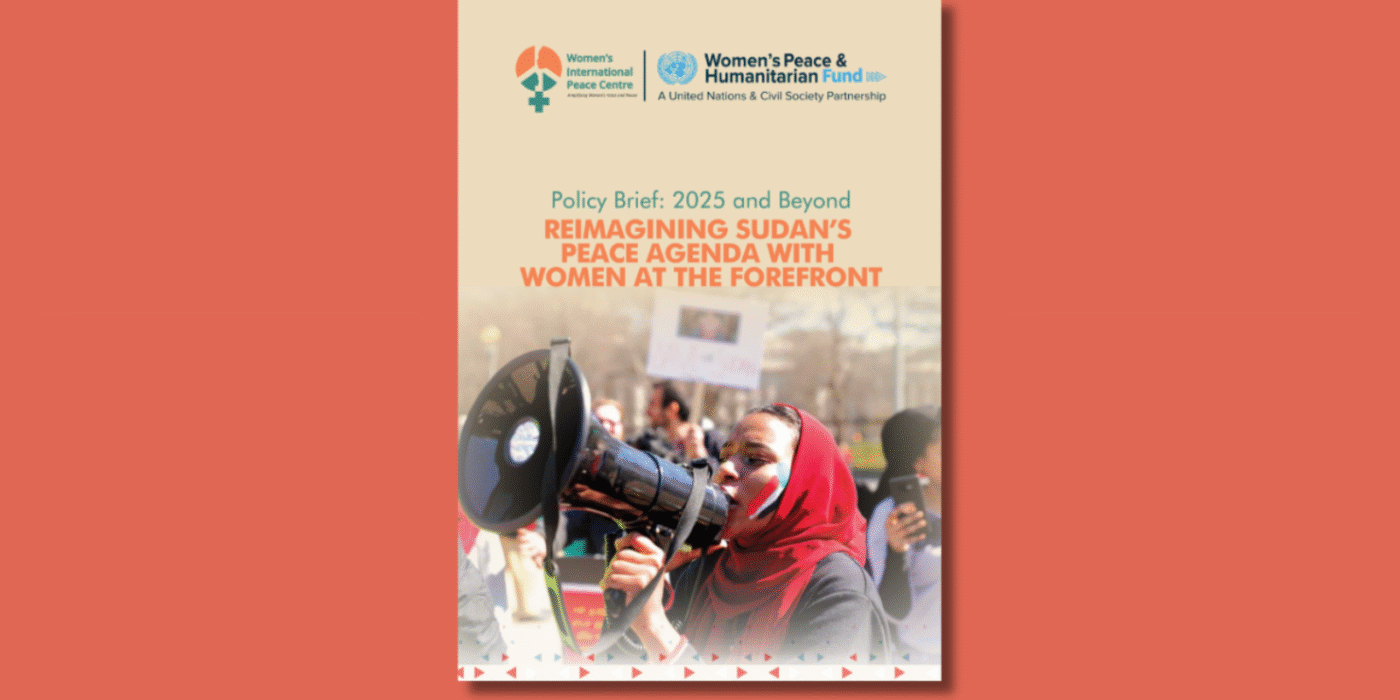
Reimagining Sudan’s Peace Agenda With Women ForeFront

Sudan’s ongoing conflict, which erupted in April 2023 between the Sudanese Armed Forces (SAF) and the Rapid Support Forces (RSF), has brought unprecedented suffering to the population, with devastating consequences for women and girls. Despite these grim realities, Sudanese women have demonstrated remarkable resilience, often leading community-based initiatives to maintain social cohesion and advocate for peace. However, systemic barriers, including patriarchal norms and militarized governance, continue to exclude them from formal decision-making and peace processes. This exclusion undermines the legitimacy and sustainability of peace initiatives, further marginalizing the very individuals most affected by the conflict.

The brief argues that genuine inclusion of women in peacebuilding is not a favor but a moral and political obligation essential for sustainable solutions. It advocates for transformative approaches that prioritize women’s agency, leadership in shaping Sudan’s future. It offers targeted recommendations to dismantle systemic barriers, enhance women’s representation in decision-making, and ensure that gender-sensitive responses are embedded in peacebuilding and recovery efforts.

Download Policy Brief (EN): Reimagining Sudan’s Peace Agenda With Women ForeFront

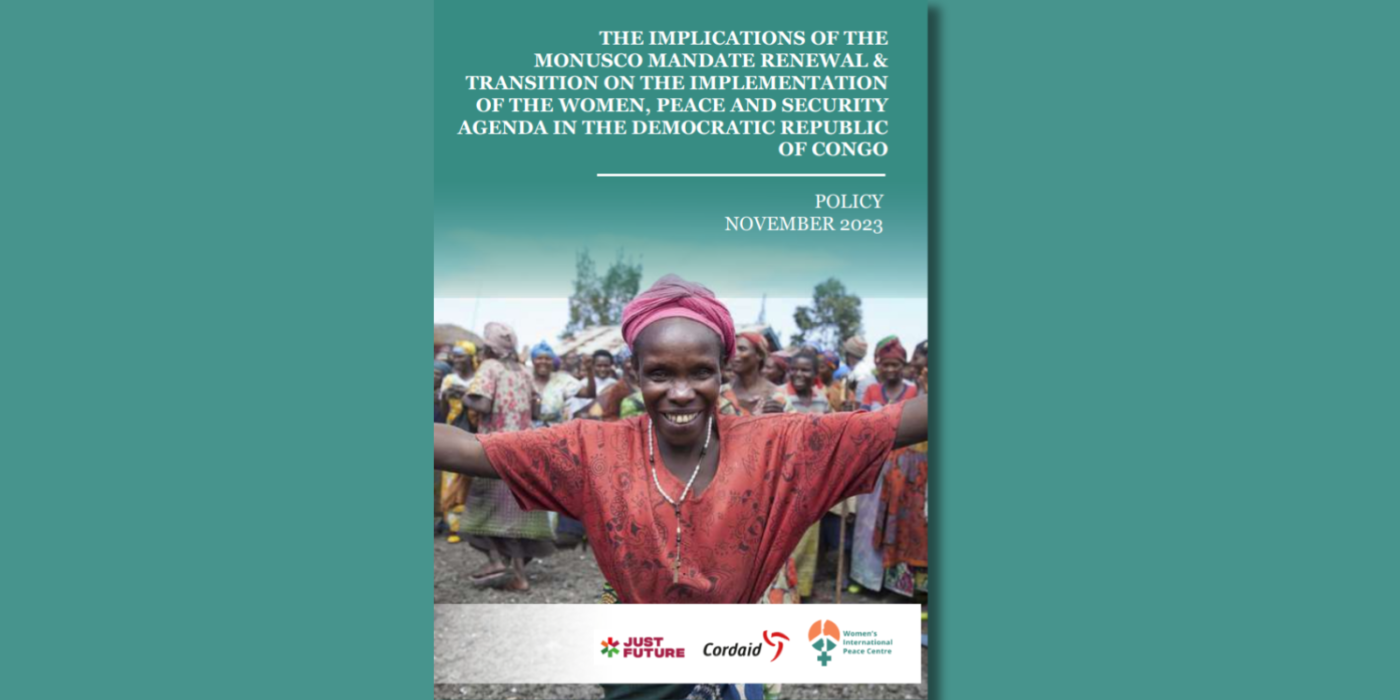
The Implications of MONUSCO Mandate Renewal & Transition on the Implementation of the Women, Peace and Security Agenda in the Democratic Republic of Congo

This policy brief examines the critical implications of MONUSCO’s mandate renewal and transition on the implementation of the Women, Peace, and Security (WPS) agenda in the Democratic Republic of Congo (DRC). As the country grapples with persistent conflict, ethnic violence, and the systematic use of sexual violence, particularly in the eastern provinces, the situation for women and girls remains dire.

While MONUSCO has played a key role in peacekeeping efforts, allegations of sexual abuse by peacekeepers and the ongoing insecurity raise serious concerns about the mission’s effectiveness. Despite some progress, including the adoption of National Action Plans for UNSCR 1325 and the FONAREV law for conflict-related sexual violence survivors, justice remains elusive for many.

This brief underscores the urgent need for gender-sensitive security sector reform, meaningful inclusion of women in MONUSCO’s decision-making, and stronger partnerships with local civil society to advance the WPS agenda and deliver transformative change in the DRC.

Download Brief: Implications of MONUSCO Renewal & Transition on the Implementation of the WPS Agenda in the DRC.

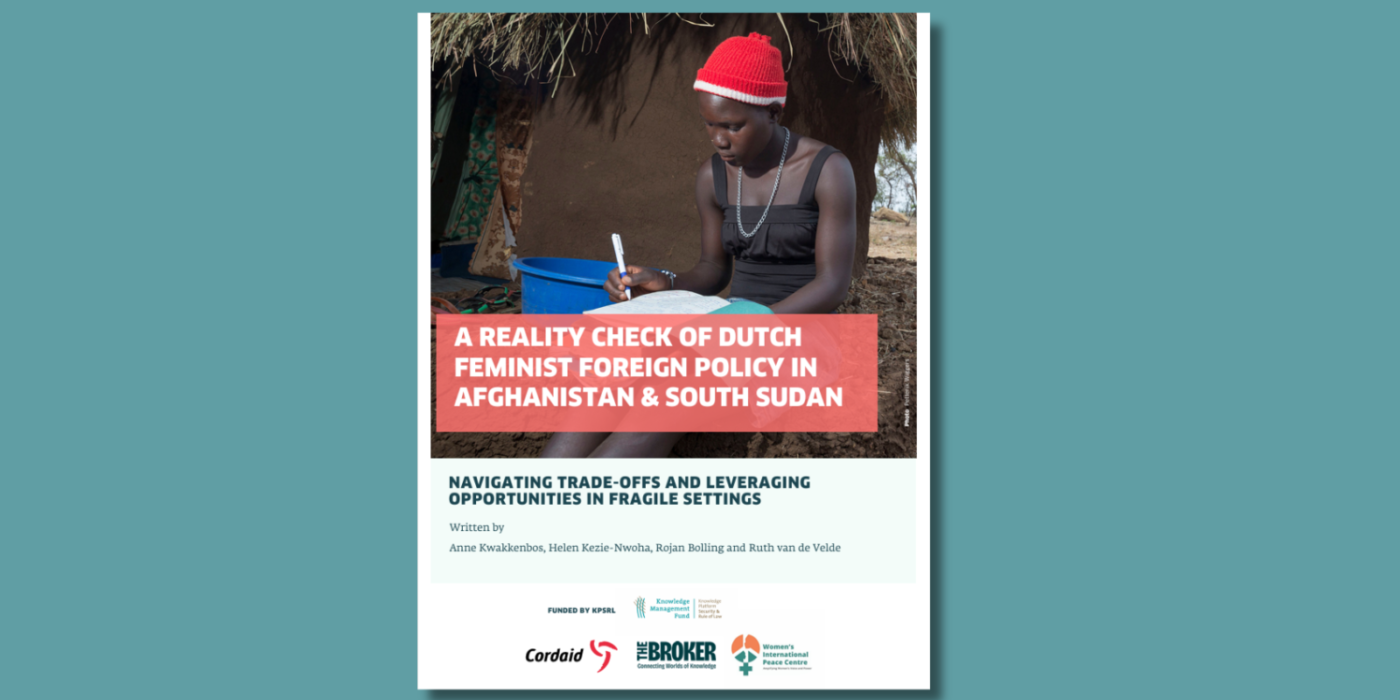
A Reality Check of Dutch Feminist Policy in Afghanistan and South Sudan

This report presents key insights from Dutch Feminist Foreign Policy (FFP) initiatives in South Sudan and
Afghanistan, synthesising challenges and opportunities. It begins by defining and exploring the concept of FFP
and its relevance to social contracts in fragile settings. Subsequently, it examines Dutch FFP objectives and
critical assumptions. The report then delves into the specific contexts of South Sudan and Afghanistan, outlining
Dutch FFP ambitions, assessing current efforts and needs, and identifying implementation opportunities. It is
structured into two main sections focusing on each country’s context and needs, followed by insights from
SWOT analyses from the workshops with policymakers and practitioners informing actionable
recommendations for enhancing FFP strategies

Read Brief: A-Reality-Check-of-Dutch-Feminist-Foreign-Policy-in-Afghanistan-and-South-Sudan

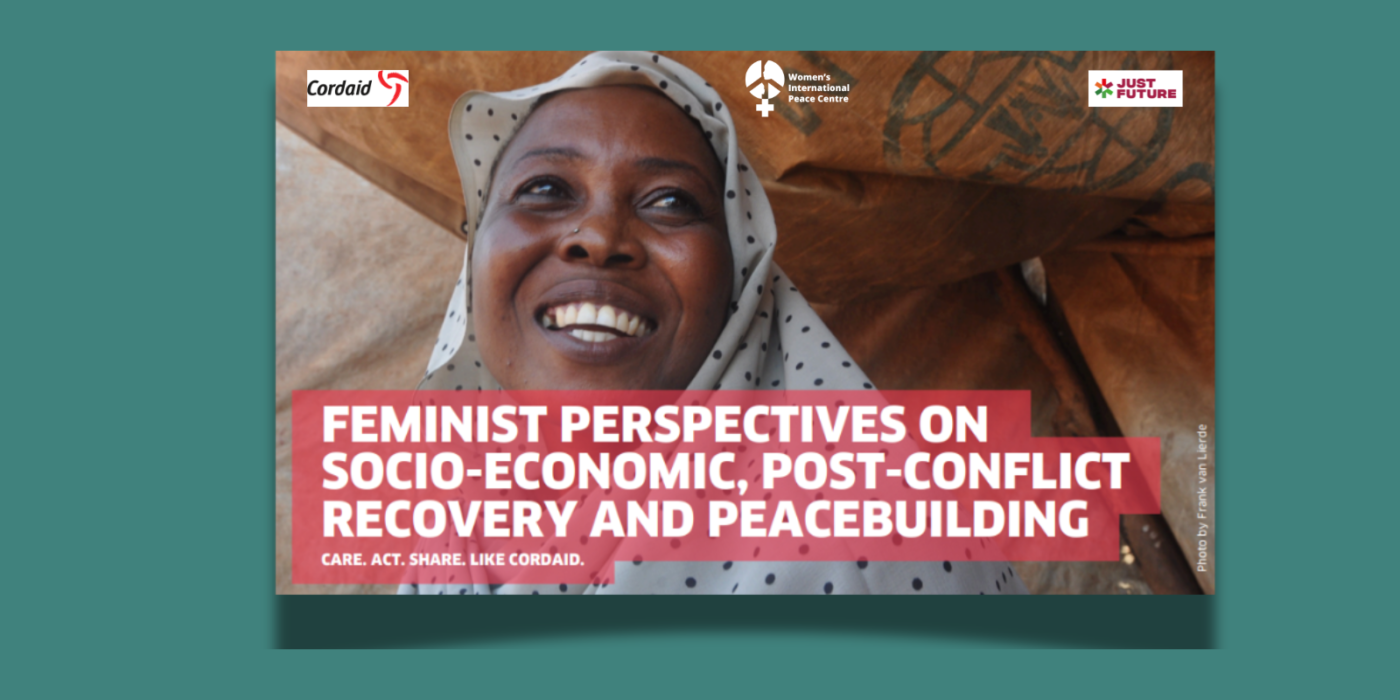
Feminist Perspectives on Socio-Economic, Post- Conflict Recovery and Peacebuilding

Post-conflict recovery and peacebuilding require innovative, diverse approaches to ensure sustainable peace and socioeconomic development. Despite frameworks like CEDAW and the Beijing Declaration, the gendered impacts of
conflicts and women’s roles in peace processes have long been overlooked. In response to advocacy by women’s movements, the UN adopted Security Council Resolution 1325 on the Women, Peace, and Security (WPS) Agenda in 2000.
Yet, the vulnerabilities and significant contributions of women in these processes remain under recognised, underscoring the need to better integrate them for effective and lasting peacebuilding efforts.

At the 68th annual Commission on the Status of Women (CSW68), Cordaid’s Just Future Alliance partner, the Women’s International Peace Centre (WIPC), organised two key parallel events. The first event featured representatives from women’s rights organizations in the Democratic Republic of Congo, South Sudan, and Iraq, who discussed the often-overlooked role of women in the socio economic recovery of post-conflict societies.
The second event explored the importance of a progressive taxation system in reducing poverty through a gender-transformative approach. The events offered a solid foundation to advocate for incorporating feminist approaches into peacebuilding and poverty alleviation strategies that prioritise women’s needs,
such as enhanced livelihoods and reparations.

The testimonials from women human rights defenders from the different conflict affected settings included meaningful recommendations for governments, donors and national civil society

Read Policy Brief: Feminist Peacebuilding Policy Brief (Document (A4)) (1)

Universal Periodic Review – Civil Society Alternative Report

In 2019, the Democratic Republic of the Congo (DRC) underwent its third Universal Periodic Review (UPR) by the United Nations Human Rights Council, receiving a series of recommendations aimed at improving the country’s human rights landscape. To assess the implementation of these recommendations, 120 Congolese Civil Society Organizations (CSOs), supported by the JUST FUTURE program, compiled an alternative report. This comprehensive evaluation provides crucial insights into the progress and challenges faced by the DRC in upholding human rights.

Key themes addressed in the report include; Civic Space and Human Rights Defender (HRD) Protection, Peace Process and Internally Displaced Persons (IDP) Assistance, Women’s and Youth Participation in Peace Processes and Elections and Transitional Justice, Impunity, and Corruption.

The alternative UPR report underscores the critical role of civil society in monitoring and advocating for the implementation of UPR recommendations. Enhanced collaboration between the DRC government and CSOs is essential to drive progress in human rights, peacebuilding, and inclusive governance.

Download: UNIVERSAL PERIODIC REVIEW ALTERNATIVE REPORT

Putting Women at the Centre of South Sudan’s Peace and Security Agenda: Insights from Civil Society’s Engagement with the African Union’s Peace and Security Council

On 23rd February 2023, the African Union Peace and Security Council (AU PSC) met with civil society organizations, think tanks and faith-based organizations (FBOs) in Juba, South Sudan, to discuss the socio-political, economic and security situation in the country. Prior to the meeting, women-led civil society organisations (CSOs) held a preparatory meeting where they agreed on key issues of concern and the role of women in the implementation of the newly announced Roadmap to a Peaceful and Democratic end of the Transitional Period for peace.

Drawing on the discussions and recommendations put forward by the women-led CSOs during the engagement with the AU PSC, this information brief highlights key priorities for women in South Sudan’s peace and security agenda. It provides actionable recommendations for policymakers on how to strengthen the role of women-led CSOs in promoting gender equality and sustainable peace in South Sudan

CSO representatives nominated to present the identified issues to the Peace and Security Council were from Centre for Inclusive Governance, Peace and Justice, Women’s International Peace Centre and the Young Women’s Christian Association.

Download the Information Brief : WIPC_Putting Women at the Centre of South Sudan’s Peace and Security Agenda 1