The Road to Power, Governance and Decision Making; Think Tank II

This report provides highlights of the consultative meeting that was held with South Sudanese women after the outbreak of the fresh conflict in South Sudan. The purpose of the meeting was to analyze the underlying triggers of the on-going conflict from a gender and feminist perspective; propose an alternative approach and solutions to the problem at hand; and provide insights and information on the impact of the on-going conflict on women and girls in South Sudan as well as identifying a team of women who will influence the peace negotiations  at the African Union.

Making Gender-Just Remedy and Reparations Possible: Upholding The Rights Of Women And Girls In The Greater North Of Uganda.

The research documents and analyses how war crimes have continued to affect the lives of female victims, their families and communities. It also provides an understanding of reparations based on the experiences and perspectives of women, girls their families and communities who suffered the serious crimes during the armed conflict between the GoU and the LRA in the Greater North of Uganda. The report in grounded on empirical data from in-depth interviews with over 640 victims of serious crimes and their families from the sub-regions of Acholi, Lango, Teso and West Nile in the Greater North of Uganda.

Towards An Anti-Sexual And Gender Based Violence Norm In The Great Lakes Region Of Africa: A Review of the Implementation of the 2011 ICGLR Kampala Declaration

The report discusses the progress made by each country under the three priority areas of SGBV prevention, punishment and protection as well as support and compensation for survivors. It also reflects country specific challenges and recommendations. The key finding is that majority of the governments in the ICGLR have made great strides to fulfill the commitments to prevent SGBV, punish perpetrators and support survivors. However, rehabilitation of SGBV perpetrators has not been prioritize neither is it included in the framework and national level implementation

2013 Annual Report

The year 2013 meant a new journey for Isis-WICCE. We began implementing our new strategic plan after series of sessions involving reflections, critiques and strategizing for the future.

We developed our new strategic plan after series of sessions involving reflections, critiques and strategizing for the future. In line with the goals and objectives of the strategic plan, we have amplified voices, we ignited women’s agency to re(create) peace as defined by women. Oftentimes development approaches involve planning on behalf of communities. The implementation of those plans tends to perpetuate inequalities and disenfranchise women.

Our approach to work recognizes and respects the voices of women, girls, men, and boys in armed and post conflict countries. We challenged governments to deliver on policy promises and commitments made at national, regional and international levels through our documentations that reveal gaps in policy implementation particularly for countries where we worked. We provided healing to women; we believe that peace building cannot be sustained without healing the body, mind and spirit of women survivors. Over time, we observed that quantifying this type of work is very difficult, however we have used women’s stories to capture the changes in their lives, we have developed a monitoring framework to help us track the work we do and the difficulties that arise from the nature of our work. We are consoled that when we heal one woman, when we shift one woman’s life, it will impact on her wellbeing and also impact on the socio economic status of her family and the community at large.
Healthy Families for a Peaceful Community

The report presents the highlights of the 4th Peace Exposition held in Kotido district of the Karamoja sub-region. The Peace Expo is one of the national spaces created by Isis-WICCE to afford grassroots women the opportunity to meet their leaders and policymakers as they openly audit national and local post-conflict reconstruction plans as well as their effect on the affected communities.

Kashmir Women; The Burden of Conflict, Half Widowhood and its Psychological Effects.

Isis-WICCE in partnership with Jamme/Kashmir Association carried out a study on the ‘impact of armed conflict on the Health of half widows in Kashmir- India’. The study explored the mental, social and physical impact of violence on the health of the half widows, mothers and sisters whose husbands and male relatives had gone missing due to the conflict. Forty-five women were randomly selected from the three districts of Srinagar, Baramulla and Kupwara of Kashmir valley, comprising of half widows (whose husbands are missing in custody), mothers of disappeared persons (whose sons are missing in custody), sisters (whose brothers are missing in custody) and daughters of the missing persons. Key findings show that half widows have become targets of sexual violence from those viewing them as defenseless.

Pushed to the Periphery; The Necessity of Women’s Innovation in Activating Post Conflict Reconstruction

This report provides an analysis of the extent to which post conflict reconstruction efforts in Burundi, Liberia and Sierra Leone have implemented national commitments for women’s participation in conflict management, post conflict reconstruction and rehabilitation processes, as provided for in UNSCR 1325. Based on semi-structured interviews and focus group discussions with women’s activists, the research considered diverse expressions of femininity that speak to notions of “peace” in terms of local women’s groups contribution to bringing peace in all 3 countries, their experiences and knowledge were not taken into account in the post conflict phase neither were they considered key actors that could contribute effectively to post conflict reconstruction.

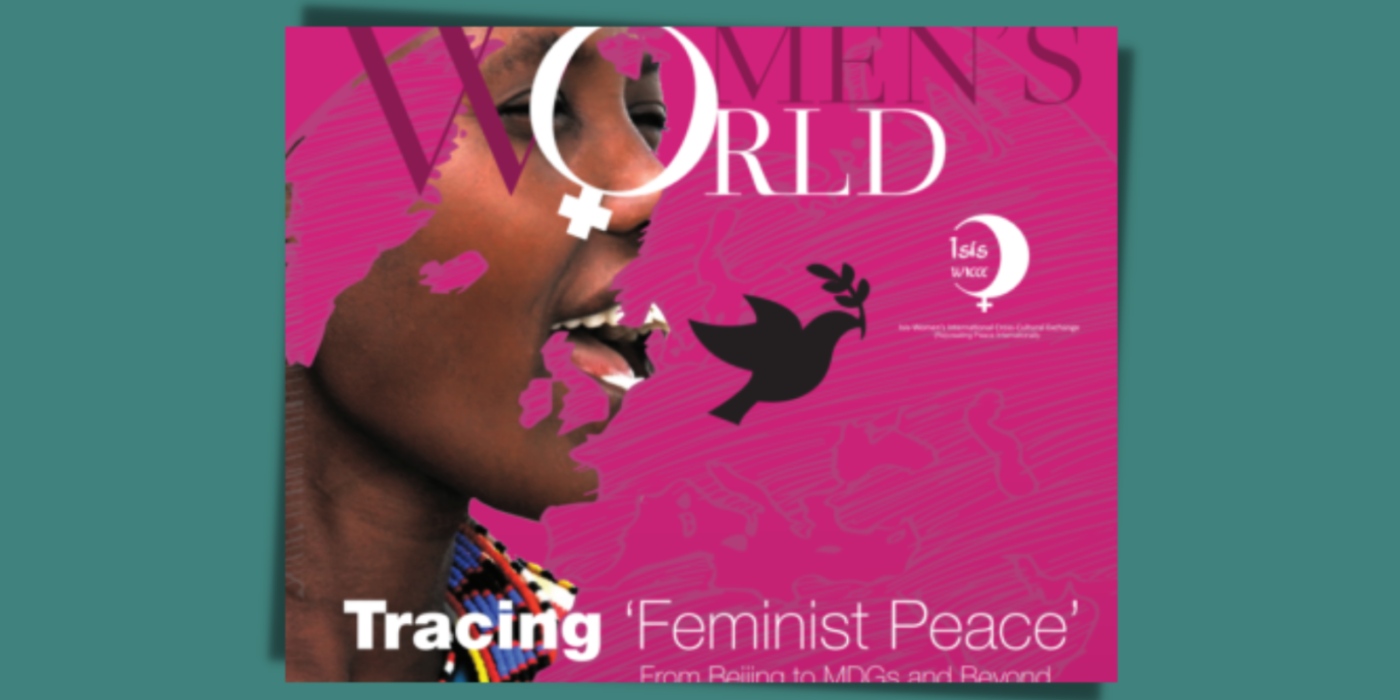
15 Years of UNSCR 1325: Looking Back to Look Forward

This issue of Women’s World magazine assesses the implementation of the UN Security Council Resolution (UNSCR) 1325 after 15 years, using case studies from Myanmar, the Democratic Republic of Congo (DRC), Nepal, South Sudan, and Uganda.

Background of UNSCR 1325

  • UNSCR 1325 was unanimously adopted in October 2000 and recognized the imperative of a gender perspective in peace and security discourse, addressing the disproportionate impact of conflict on women and girls, and ensuring their participation in peace processes.
  • The resolution is underpinned by four pillars:
    • Prevention: Focusing on reducing conflict and all forms of violence against women.
    • Participation: Ensuring women and their interests are included in peace and security decision-making.
    • Protection: Focusing on women’s safety, mental and physical health, and economic security.
    • Relief and Recovery: Focused on women’s specific needs in conflict and post-conflict situations.

Key Findings on Implementation

  • Progress and Achievements: Various legal and policy frameworks have been established to promote UNSCR 1325, along with local mechanisms to prevent and punish sexual and gender-based violence (SGBV).
  • Gaps and Obstacles:
    • Lack of political will and insufficient or no resource allocation for implementation.
    • Continued prevalence of SGBV and lack of access to justice for women, especially when perpetrators are security officers or political party members.
    • Poor health service provision, unaddressed mental and sexual health needs, and post-conflict recovery interventions that marginalize women’s concerns.
    • Weak coordination and lack of accountability mechanisms to enforce effective implementation.

The magazine aims to inform action by governments and discussions as the post-2015 development agenda is mapped out.

Download Publication here: Women’s World Magazine 47 English (1)